August 2025

Motivation Mastery: Unlock Your Inner Drive and Crush Your Goals

Motivation Mastery: Unlock Your Inner Drive and Crush Your Goals

Ever wonder why some days you wake up ready to conquer the world and other days, the bed feels like a magnet? Motivation is that sneaky force inside you—it can make you a superhero or turn you into a couch potato. Let’s decode the science and secrets to fuel your inner fire and keep it burning bright.

Cartoon brain with motivation energy symbols

Why Motivation Fluctuates: The Brain and Hormone Showdown

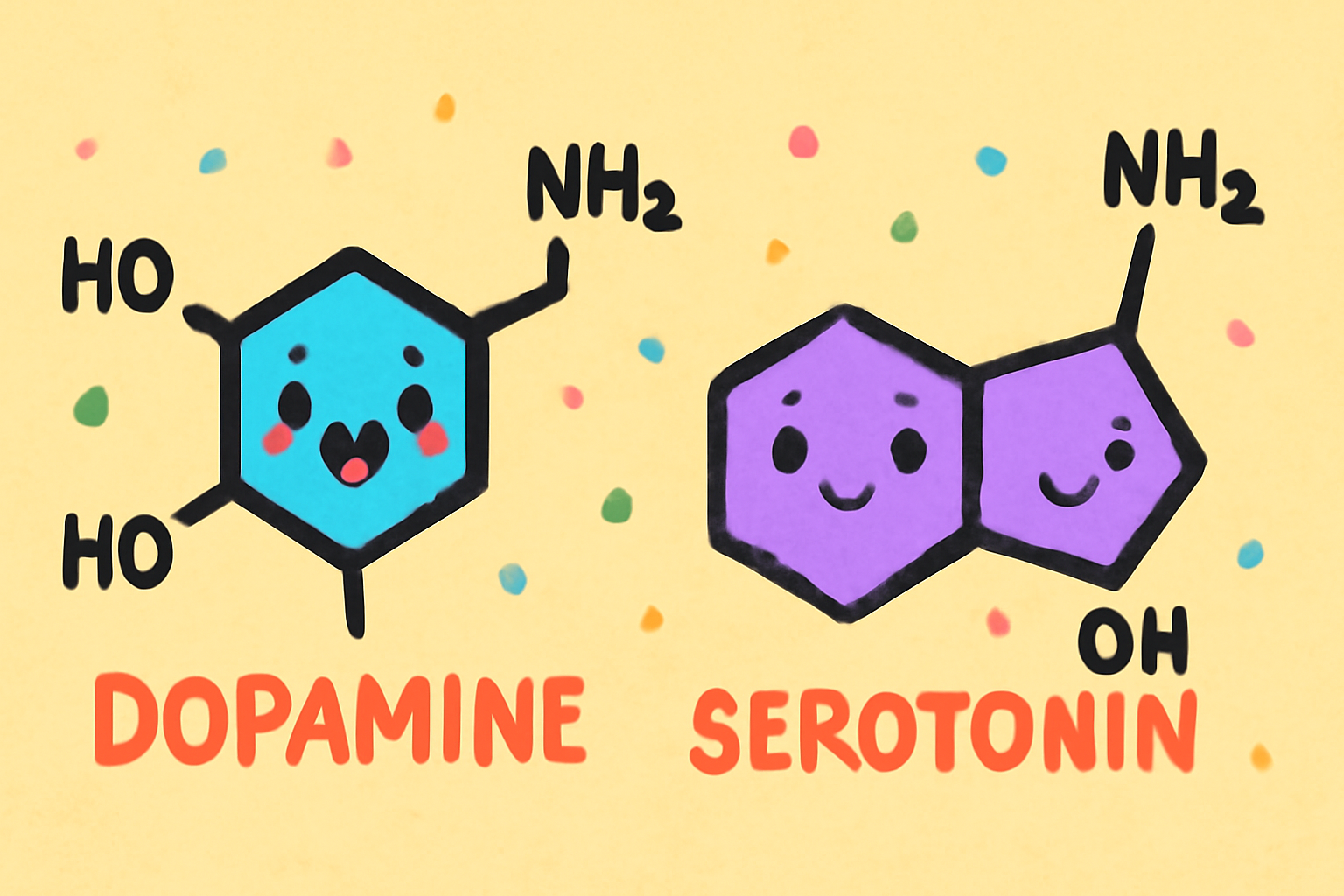
Your brain is a chemistry lab where dopamine, serotonin, and cortisol play tug-of-war to decide your motivation level. Dopamine drives your reward system, serotonin stabilizes your mood, and cortisol (yep, the stress hormone) can either fuel your fire or put it out.

Cartoon dopamine and serotonin molecules with happy faces

How to Hack Your Motivation

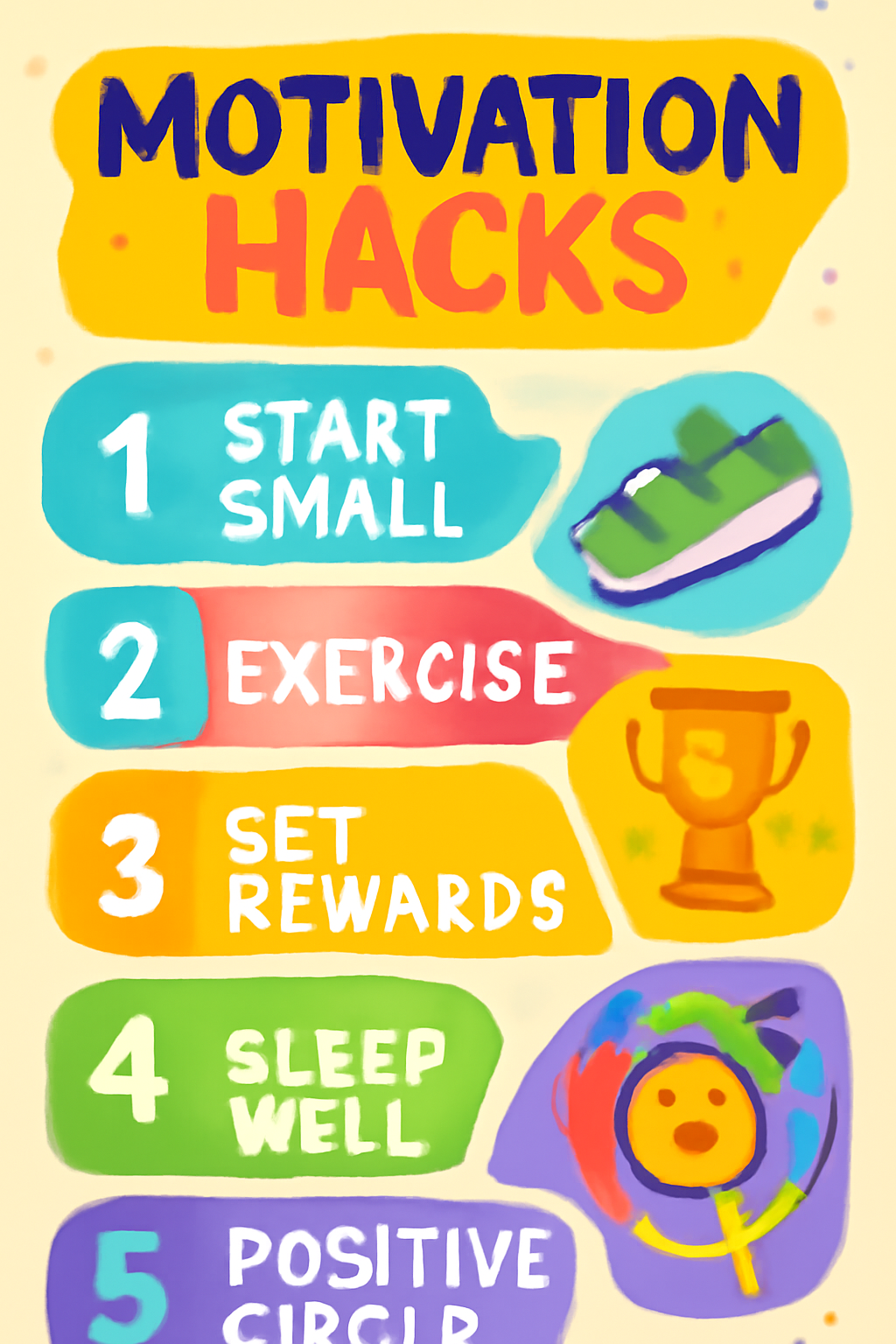
  • Start Small: Break big goals into tiny wins to keep dopamine flowing.
  • Get Moving: Exercise boosts serotonin & dopamine, shaking off sluggishness.
  • Set Rewards: Treat yourself for progress—it’s science, not bribery!
  • Sleep Well: Your brain recharges motivation overnight.
  • Positive Circle: Surround yourself with hype people, not energy vampires.

Infographic of motivation hacks

TL;DR: Keep Your Inner Fire Blazing

Motivation isn’t magic—it’s biology plus habit. Feed your brain right, move your body, rest well, and celebrate progress. You’ve got that superhero spark, now let it shine!

Motivation Mastery: Unlock Your Inner Drive and Crush Your Goals Read More »

From Sneezy to Savage: How to Rule the Immunity Game

Immunity Unlocked: How to Keep Your Body’s Squad Ready to Slay

Immunity is simple: it’s your body’s resistance force to keep nasty germs at bay or to fight back if they invade your body’s “lands.” Imagine it like your own personal superhero squad working 24/7 to keep you healthy and winning.

Cartoon superhero immune cells fighting germs

What Are Antibodies? Your Body’s Custom-Made Germ-Busting Weapons

Antibodies are Y-shaped proteins your immune system creates to lock onto specific germs. Each antibody is tailor-made, like a custom key for one exact virus or bacteria. Your B cells are the masterminds, mixing and matching proteins so the antibody fits perfectly. This is why vaccines are a game changer—they train your immune system with an invader’s “selfie,” so your body builds the right antibodies ahead of time.

Cartoon antibodies attacking viruses

Why Do Some Kids Get Sick All The Time While Others Stay Fit?

Imagine your class with 40 students—some catch every cold, others breeze through the year without sneezing once. What’s the secret sauce?

  • Genetics: Some people naturally have stronger immune squads.
  • Nutrition: A colorful diet powers up immune troops; junk food runs them down.
  • Sleep & Stress: Well-rested and chill kids have sharper immune defenses than stressed and tired ones.
  • Exposure to Germs: Kids with more early exposure build bigger “antibody libraries,” training their immune system.

Vitamins & Minerals: Secret Agents Powering Your Immune Army

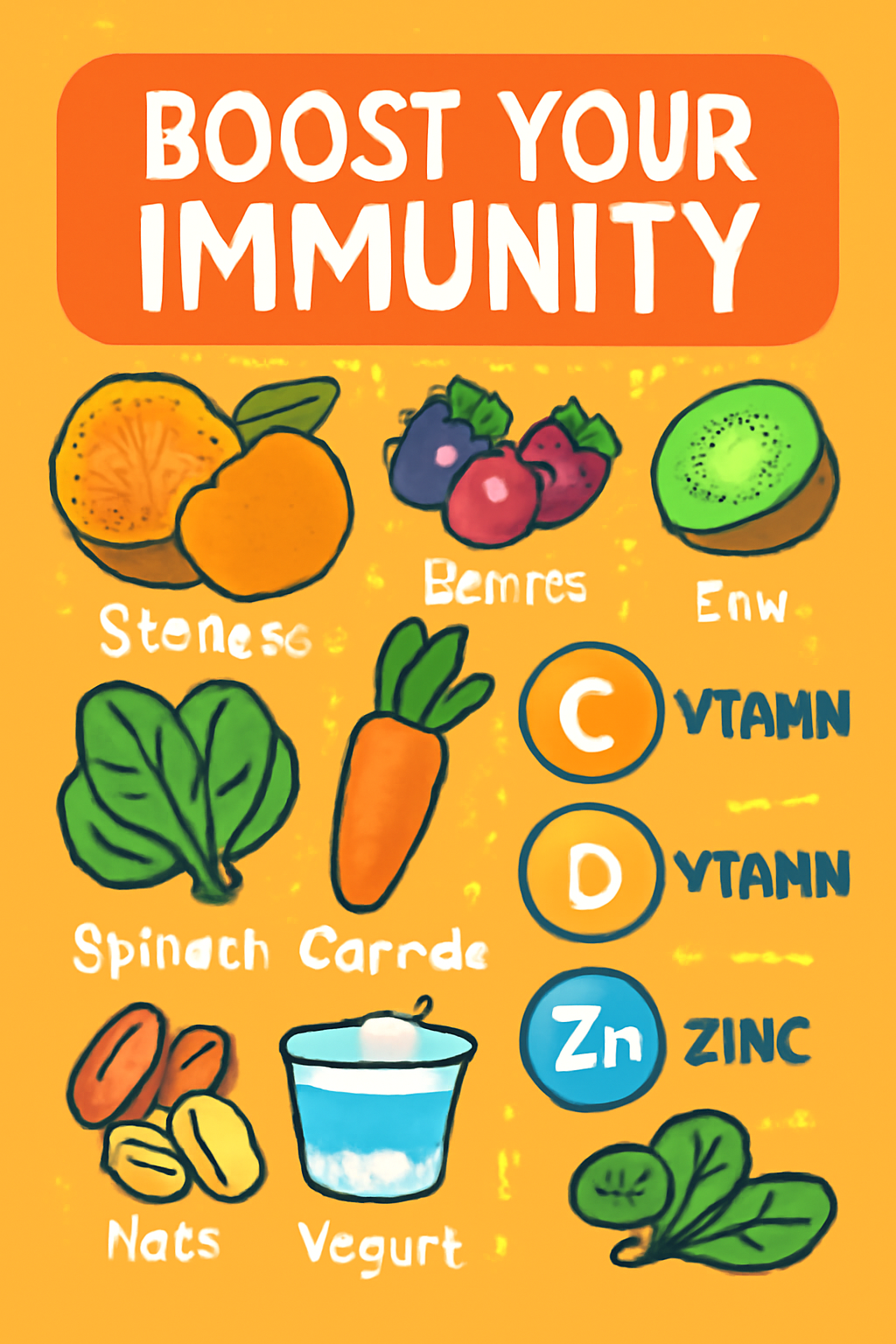
Nutrient How It Boosts Immunity Why It Matters Best Food Sources
Vitamin C Boosts white blood cells & antibody production Less colds, faster healing Oranges, guava, amla, bell peppers
Vitamin D Activates killer T-cells, controls inflammation Low levels = more infections Sunshine, eggs, mushrooms, milk
Vitamin A Strengthens mucosal barriers, supports immune cells Prevents germs sneaking in Carrots, spinach, papaya, dairy
Vitamin E Protects immune cells from damage Keeps immunity strong under stress Almonds, sunflower seeds, peanuts
B Vitamins Produce and energize immune cells Boost energy, faster responses Whole grains, beans, leafy greens
Iron Supports immune cell attacks & antibody creation Low iron = weak immune response Spinach, beetroot, meat, jaggery
Zinc Speeds white blood cells and antibody targeting Deficiency weakens immunity Pumpkin seeds, cashews, lentils
Selenium Antioxidant, controls inflammation & antibodies Too little = weak, too much = chaos Brazil nuts, eggs, fish, grains
Copper & Magnesium Help make antibodies and activate immune cells Needed for immune system communication Nuts, seeds, whole grains, greens

Infographic of healthy foods and vitamins boosting immunity

TL;DR: Be Your Class’s Immunity Legend

  • Eat a rainbow every day—colors mean nutrients and a stronger immune army.
  • Sleep well—that’s when your immune squad recharges.
  • Stress less—cortisol is the lazy hormone that slows your troops.
  • Keep moving—exercise trains your immune team to fight better.
  • Vaccines = training drills—your body’s sneak peek to germs.

Follow these tips and you’ll be the “why are they never sick?” legend everyone talks about. Science + food + chill = immunity Simplebodyology style!

From Sneezy to Savage: How to Rule the Immunity Game Read More »

Viral Fever Doesn’t Play Fair—Neither Should You

Viral Fever Doesn’t Play Fair—Neither Should You

Hero Intro: The Myth That “Viral Fever is Just Like Any Fever”

Meera looks at her thermometer, eyebrows raised. “Just a little viral fever, no big deal, right?”

Rohit replies, “If that were true, every sniffle wouldn’t make us cancel plans or miss work.”

Nani, wise as ever, chimes in, “Viral fever is serious business—but neglect and myths make it worse. No excuses, only facts.”

Relatable Story: Fighting the Fever Battle at Home

At home, Meera is curled up under a blanket. Rohit pours warm water and reminds, “Drink plenty of fluids, it’s not just old wives’ tales, it helps your body fight.”

Nani prepares simple rasam and says, “Eat light but protein-rich food—your body needs fuel to make infection-fighting cells.”

Myth-Busting: Causes and Cure of Viral Fever Explained

Myth: Viral fever just means rest and waiting it out—nothing else matters.

Reality: Viral fever is caused by viruses invading your body. Your immune system fights back, and supporting it with hydration, nutrition, and rest improves recovery.

Hydration helps because fever causes fluid loss through sweating, breathing, and sometimes vomiting or diarrhea. Drinking water replaces lost fluids and helps keep organs functioning well.

Protein intake is critical: your body uses amino acids from protein to build antibodies and immune cells. Without protein, recovery drags and risks complications increase.

Ignoring fever or relying solely on medication without supporting your body slows healing.

What to Avoid During Viral Fever and Why

  • Avoid drinking less water: That only worsens dehydration caused by fever, impairing recovery.
  • Avoid fasting: The body needs energy and protein to make immune cells; starving delays healing.
  • Avoid using antibiotics indiscriminately: They do not work on viral infections and can cause antibiotic resistance.
  • Avoid excessive sweating without hydration: Causes fluid loss and further weakness.
  • Avoid relying solely on medications: Fever reducers help symptoms but don’t treat the infection itself.
  • Avoid sugary and junk foods: They reduce immune function and delay recovery.
  • Avoid ignoring severe symptoms: Persistent high fever, dehydration signs, or breathing difficulties need immediate medical attention.

Domino Effect: Ignoring Fever Can Lead to Worse Health

Ignoring viral fever or managing it badly leads to:

  • Dehydration worsens → organ strain
  • Weak immunity → prolonged infection
  • Malnutrition → slow recovery, secondary infections
  • Possible hospitalization → costly treatment and lost work

Don’t let bad habits topple your health dominoes!

Evidence & Receipts: Science Behind Viral Fever Care

  • WHO guidance: Maintain hydration with water and oral rehydration solutions during fever to prevent complications.
  • Protein importance: Amino acids from protein support antibody production and tissue repair, speeding recovery.
  • Rest & immunology: Sleep and rest modulate immune response and reduce cytokine storms associated with viral infections.
  • Why Viral Fever Is Common and Persistent in India

    Dense populations, climate, and sanitation conditions make viral infections common.

    Misinformation and over-reliance on quick medications instead of supportive care delay recovery.

    Climate factors combined with busy lifestyles reduce attention to hydration and nutrition during illness.

    The No-Nonsense Viral Fever Playbook

    1. Drink lots of water: Replace fluids lost from sweating and fever to support organs.
    2. Eat protein-rich foods: Lentils, eggs, chicken, paneer to fuel immune cell production.
    3. Rest adequately: Sleep aids immune regulation and controls inflammation.
    4. Use medications wisely: Take fever reducers as advised but don’t rely solely on them.
    5. Avoid sugary and junk foods: They impair immune function and delay healing.
    6. Seek medical care if symptoms worsen: Persistent high fever, dehydration signs, or breathing difficulties demand professional help.

    TL;DR — No Magical Cure: Serious Care Needed for Viral Fever

    Viral fever isn’t just “wait and see.” It’s your body fighting infection, demanding hydration, nutrition, rest, and reasonable treatment.

    Ignoring your body’s needs or relying on shortcuts prolongs suffering and risks complications.

    Drink water, eat protein, rest well, and act fast if things worsen. Your body is your best medicine partner.

    References

    • WHO Guidelines on Hydration and Fever Care: https://www.who.int/
    • Immunology and Protein Role in Viral Illness: https://www.ncbi.nlm.nih.gov/pmc/articles/PMC3257681/
    • Rest and Immunity: https://www.sleepfoundation.org/immune-health
    • Nutrition Advice for Viral Illness: https://www.healthline.com/nutrition/foods-for-immune-support

    Viral Fever Doesn’t Play Fair—Neither Should You Read More »

    Knees, Serve Them Else You’ll Sacrifice Every Dream of Yours for Them


    Knees, Serve Them Else You’ll Sacrifice Every Dream of Yours for Them


    Knees, Serve Them Else You’ll Sacrifice Every Dream of Yours for Them

    Hero Intro: The Myth of “Knee Pain Is Inevitable”

    Meera hobbles into the kitchen, rubbing her knee like it’s an old engine on its last breath. “Knee pain? Part of aging, right?” she sighs, glancing at her chai.

    Rohit chuckles from the sofa: “If that’s true, then I’m already retired at 35!”

    Nani, ever wise, sets down her filter coffee: “Knee pain isn’t fate. It’s a warning—and ignoring it won’t help.”

    Relatable Story: The Daily Battle with Knees

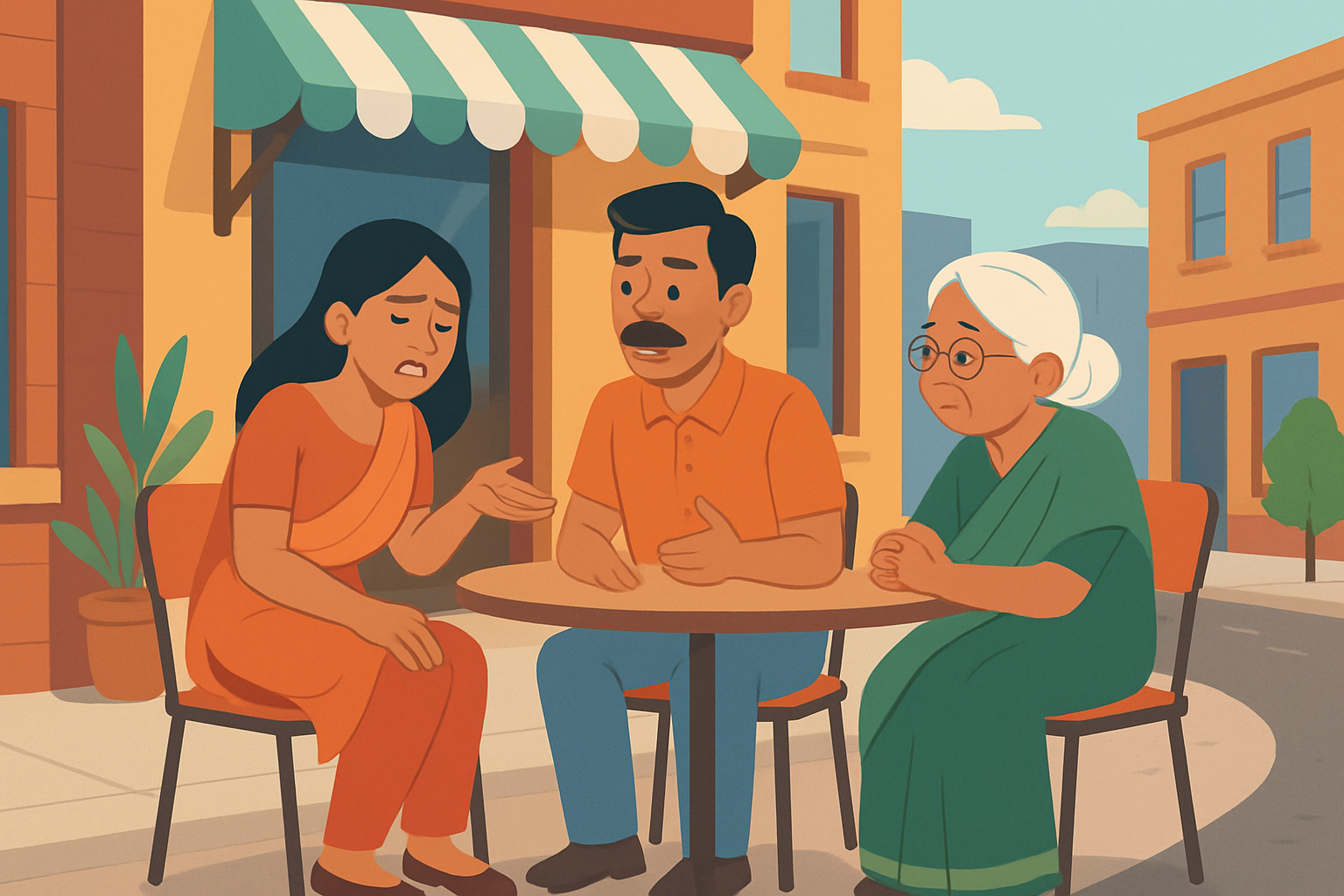
    At their favorite cafe, Meera complains: “I’m running around all day—kids, kitchen, work—and yet these knees feel betrayed.” Rohit responds, “Maybe your muscles aren’t supporting you enough.”

    Nani adds, “The knees don’t work on their own. Strong quads, hamstrings, and glutes protect them. Weak muscles mean more joint stress and more pain.”

    Myth-Busting: Why Do Knees Hurt? Is It Inevitable?

    Myth: Knee pain is just part of aging.

    Reality: Aging can cause wear, but much knee pain results from weak muscles and poor movement habits. WHO and CDC recommend strengthening the key muscles to lessen joint damage.

    Even slim people can suffer knee problems without strong muscles. Without strong quads and glutes, knees bear all the load — regardless of weight.

    Ignoring symptoms lets problems grow.

    Domino Effect: Ignore Knees, Lose Dreams

    Imagine your knees as dominos. One aches, the rest fall.

    • Pain ignored → less movement → muscle loss
    • Muscle loss → more joint strain → worsening pain
    • More pain → avoiding activity → weight gain or stiffness
    • Weight & stiffness → more joint damage → costly treatments and lost freedom

    Your dreams of hiking, dancing, or simple walks become sacrifices to pain and immobility.

    Evidence & Receipts: Science Backing Knee Care

  • WHO & CDC guidelines: Strength training at least twice a week targeting major muscles protects joints and reduces arthritis risk.
  • MET values: Walking, cycling, and knee-strengthening exercises have moderate to high METs crucial for joint health.
  • Indian study insight: Sedentary lifestyles and “slow-but-busy” routines worsen knee issues faster.
  • Muscle mass role: Higher lean mass reduces joint load regardless of BMI.
  • India’s Reality: Why Knee Problems Are Increasing

    Being busy does not mean being fit. Cultural habits like prolonged sitting, repetitive squatting without proper form, and silently enduring pain increase joint stress.

    Growing sedentary lifestyles due to traffic and desk jobs make knees more vulnerable.

    Ignoring early symptoms thinking “I just have to get on with it” leads to bigger problems later.

    The No-Nonsense Knee Rescue Playbook

    1. Prioritize muscle strength: Regularly strengthen quadriceps, hamstrings, and glutes with simple exercises.
    2. Move smart: Prefer low-impact cardio such as brisk walking and cycling to protect knees.
    3. Don’t wait to act: Early intervention prevents long-term damage.
    4. Eat protein: Supports muscle and joint health—include sources like lentils, paneer, eggs, chicken, tofu.
    5. Respect rest and recovery: Adequate sleep and stress management lower inflammation and promote healing.

    Your knees won’t remind you politely, but future you will regret ignoring their calls for care.

    TL;DR — No More Excuses, Take Care of Your Knees Now

    Knee pain is not your destiny. It’s your body’s alarm system calling for help.

    Muscle strength matters as much as managing weight.

    Ignoring problems means losing mobility, independence, and your favorite activities.

    Act now. Strengthen. Protect your knees and your dreams.

    References (Plain English)

    • WHO 2020 guidelines on physical activity and muscle strengthening: https://pmc.ncbi.nlm.nih.gov/articles/PMC7719906/
    • CDC Physical Activity Guidelines: https://www.cdc.gov/physical-activity-basics/guidelines/adults.html
    • Household activity MET values and exercise intensities: https://cdn-links.lww.com/permalink/mss/a/mss_43_8_2011_06_13_ainsworth_202093_sdc1.pdf
    • Indian physical activity and joint health study: https://ijbnpa.biomedcentral.com/articles/10.1186/1479-5868-11-26


    Knees, Serve Them Else You’ll Sacrifice Every Dream of Yours for Them Read More »

    Dear Busy Queens: Your Chores Are Fabulous—But Sorry, Scrubbing Floors Won’t Give You Abs (Future You Deserves Better!)

    Dear Busy Queens: Your Chores Are Not Exercise (Future You Deserves More)

    Hero Intro: The Kitchen Marathon

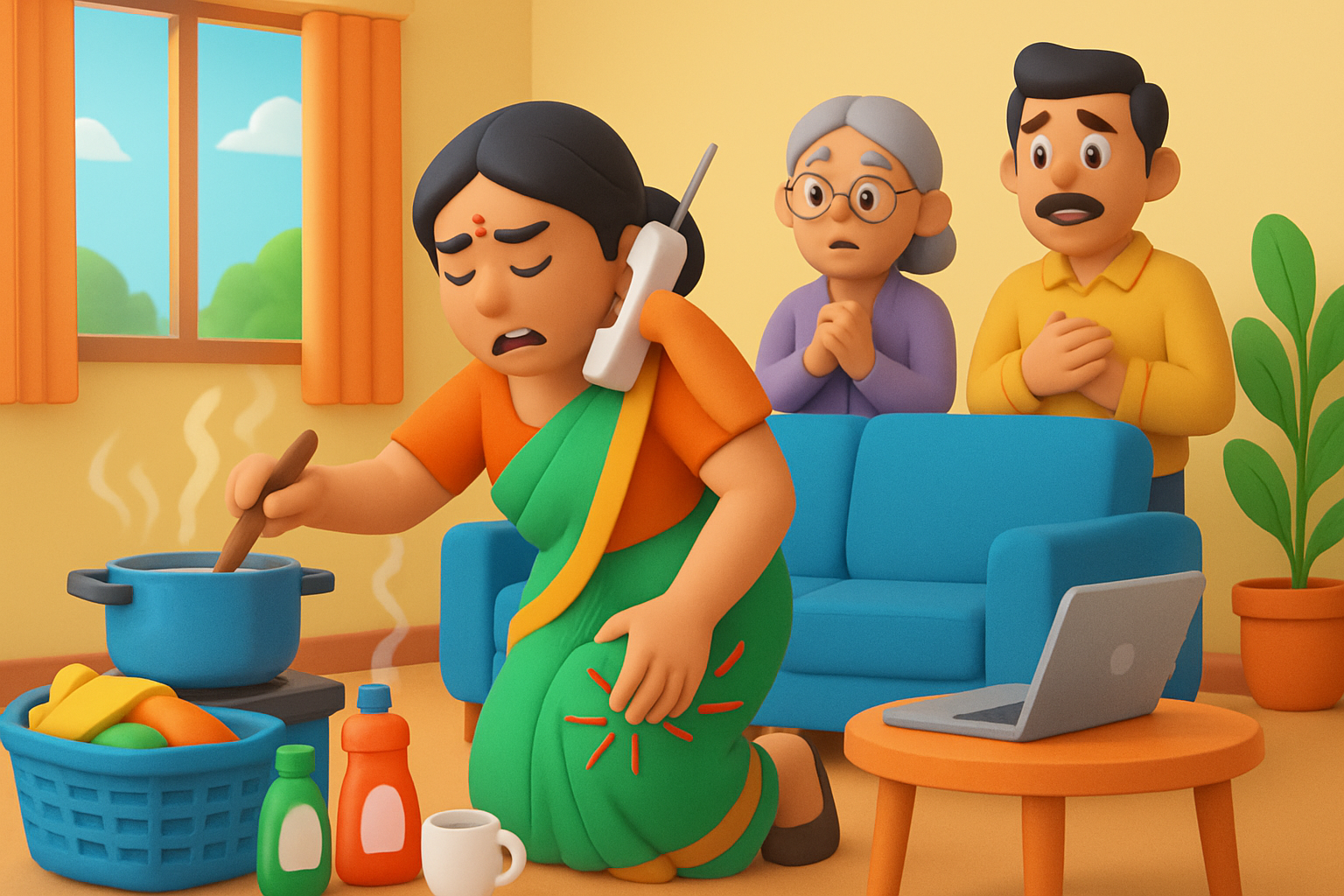
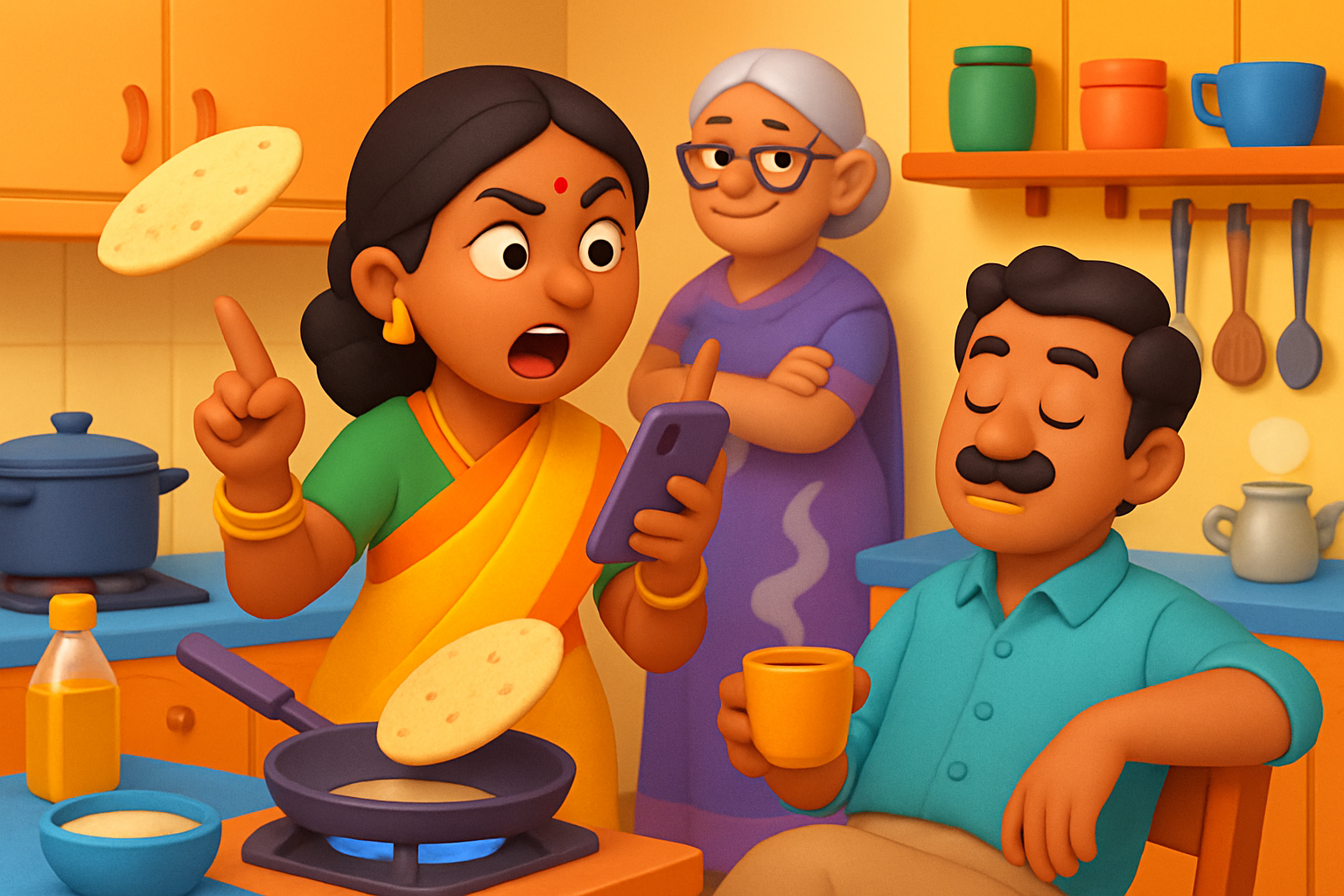
    Multitasking heroine in an Indian kitchen with family around

    Meet Meera: queen of the kitchen Olympics. She’s flipping hot rotis, yelling at her son to switch off the geyser, juggling a phone timer, and wiping sweat off her forehead — all before breakfast.

    Rohit, lounging like the king of the sofa, smirks: “If kitchen marathons were a gym, then my office chair should have made me Mr. Universe by now.”

    And then there’s Nani, with chai in hand, enjoying her front-row seat: “Beta, WHO says 150 minutes of actual exercise each week. Roti-flipping just isn’t on the list — unless you sprint between the gas stove and the fridge!”

    Everyone laughs, but Meera feels the sting. If chores aren’t exercise, then why is she always tired — and still gaining weight?

    Relatable Story: The Café Confession

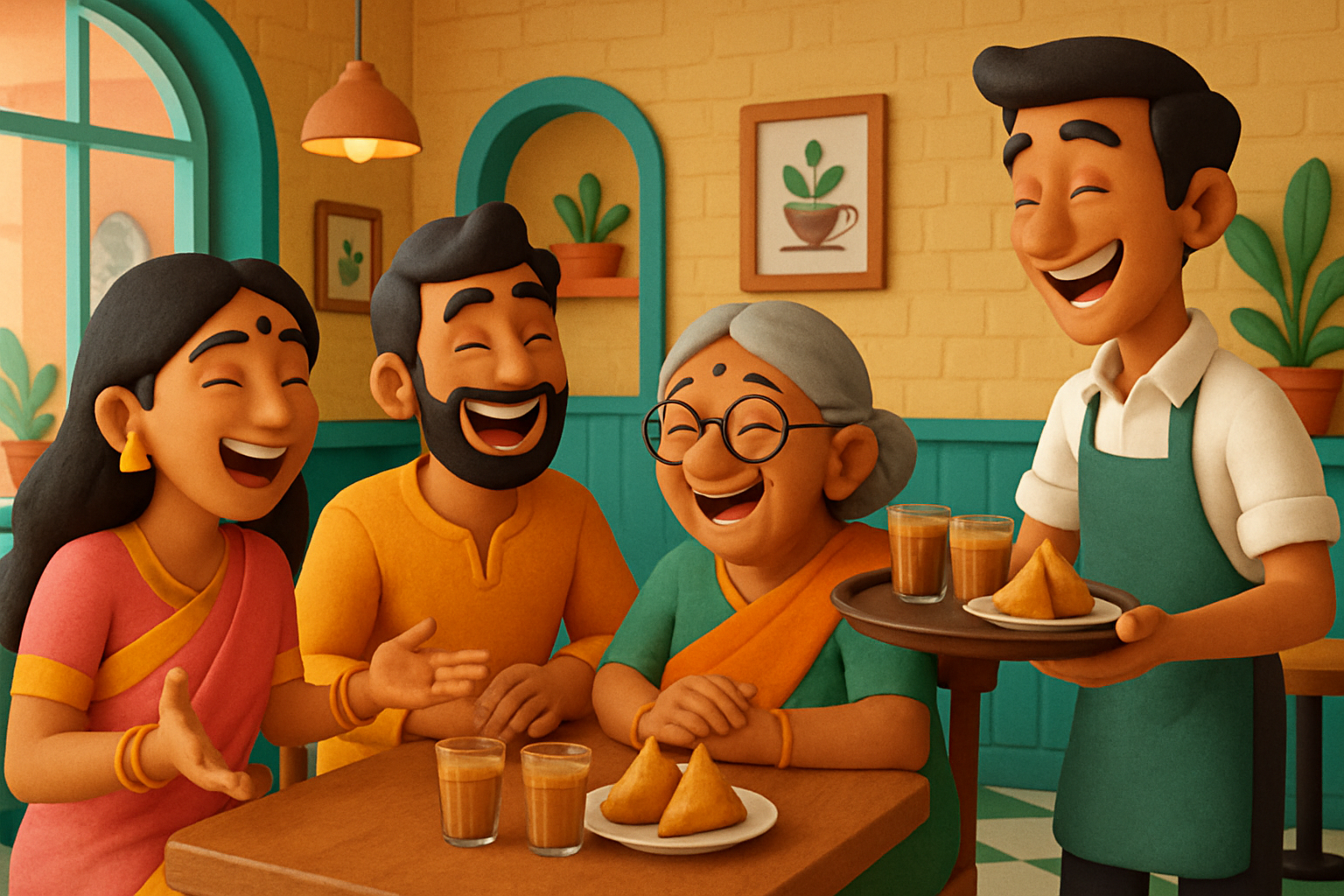
    Indian family debating in a lively café over chai and samosas

    The next day, Brew & Bite café becomes our debate arena. Over steaming cups of masala chai, Meera vents, “I’m literally on my feet all day—cooking, walking, teaching. So why am I still putting on kilos?”

    Rohit retorts with a grin: “Because vacuuming burns fewer calories than one gulab jamun.”

    Nani jumps in with her fact-checking glasses on: “An hour of mopping burns around 150 calories. But a 30-minute jog burns 350 to 400. Your daily hustle isn’t cardio; it’s survival mode.”

    Translation? You can clean the whole house spotless, but if your heart rate never sees a real push, those arteries won’t thank you.

    Myth-Busting Café Debate: Chores ≠ Exercise

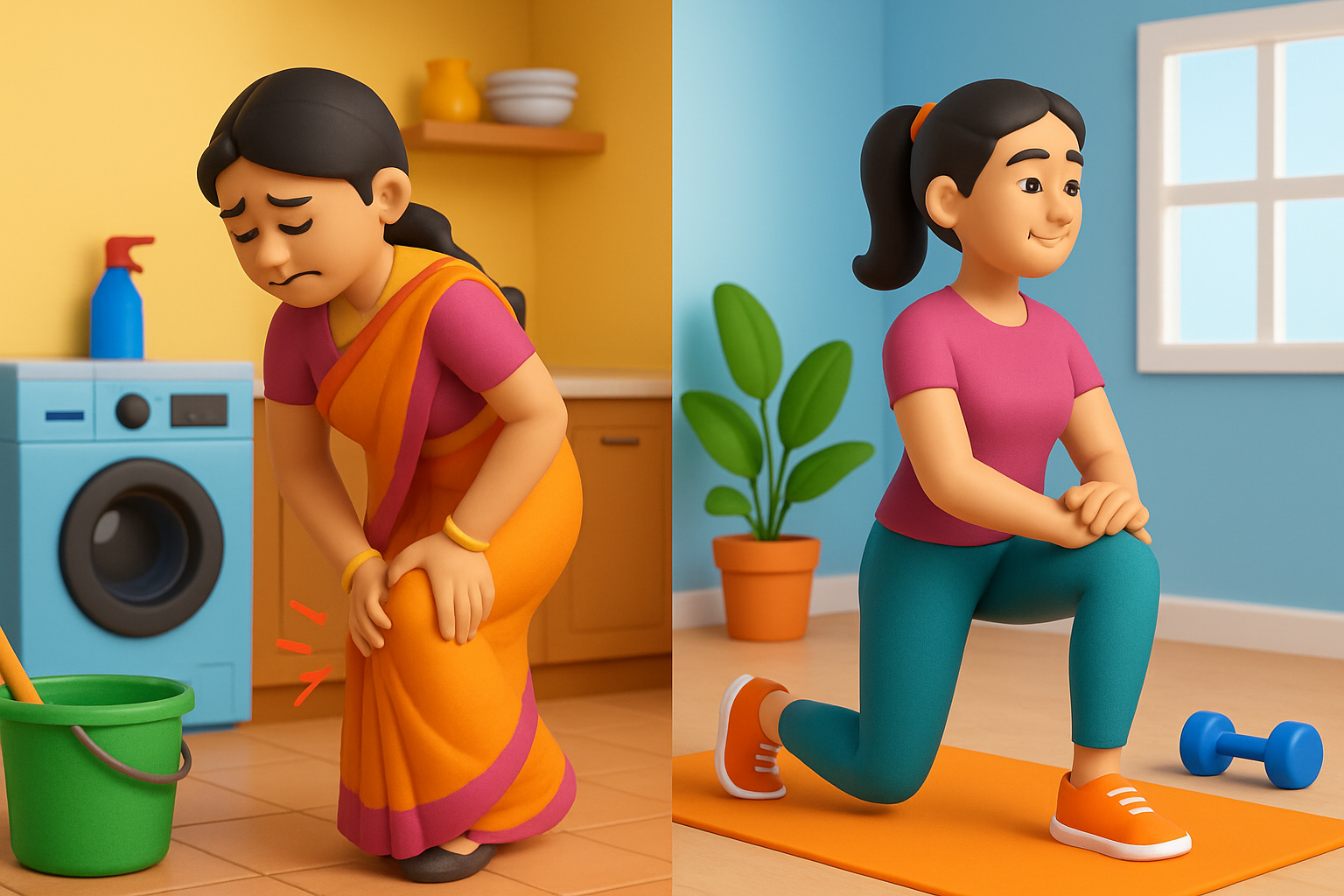
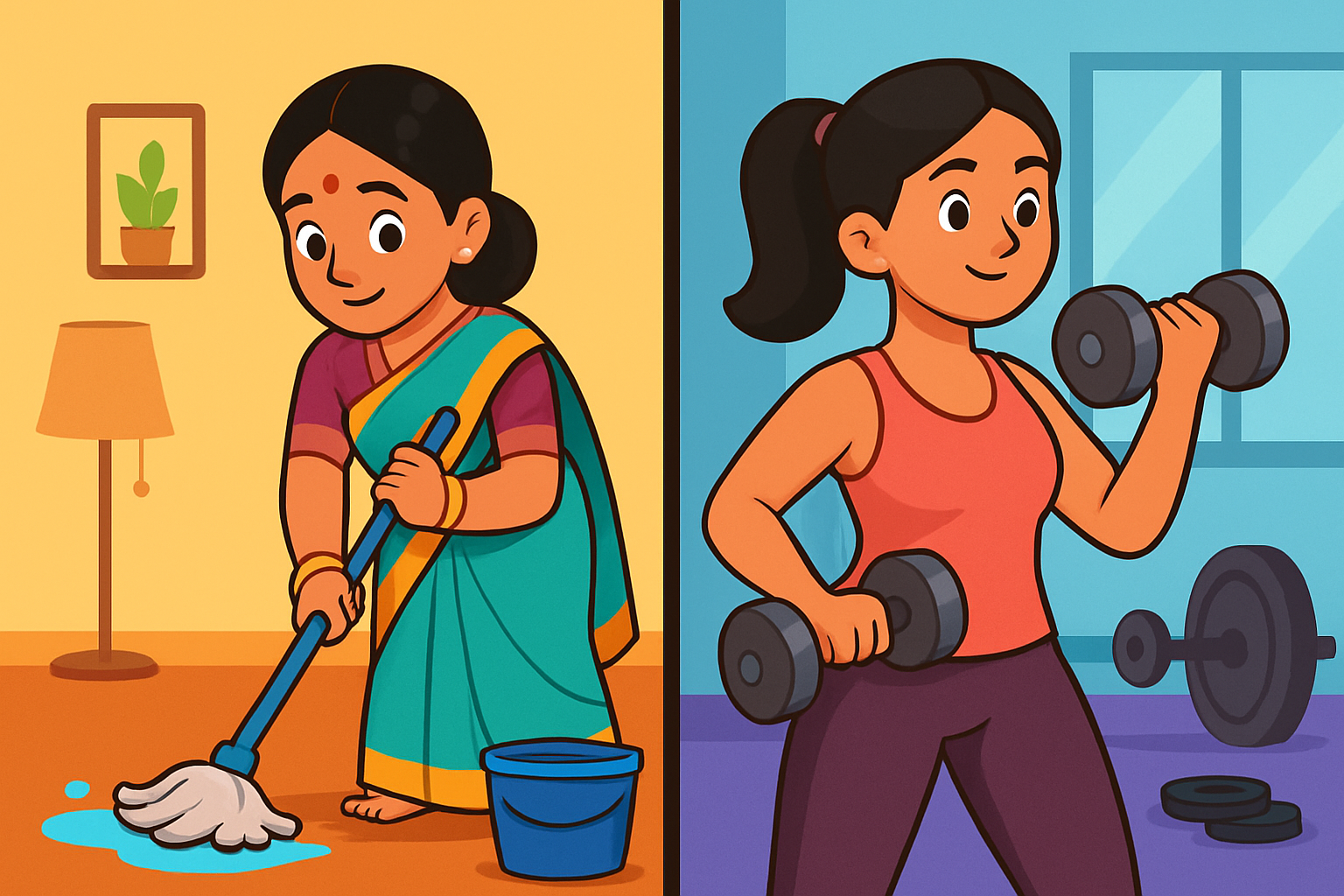
    Split: chores versus exercise for Indian women

    Quick Reality Check — METs (Metabolic Equivalent of Task):

    Activity METs (Intensity)
    Sweeping ~3
    Mopping 2.5–3.5
    Cooking 2–3
    Carrying kid (short) 5–6
    Jogging / Running 8–12

    Simply put, household chores usually hover around the light to low-moderate intensity zone, not enough to build fitness. Real cardio starts when your heart races at 5 METs or more — like brisk walks, jogging, or dancing.

    And here’s a secret: your body gets clever at chores — the same workout burns fewer calories over time. You need to challenge your muscles and heart differently, or risk future “Saree struggles” and “knee protests.”

    The Marriage Debate — Who Cares More?

    Marriage debate: couple and Nani with travel dreams and samosas

    Over dinner, Rohit pokes Meera’s plate: “Shaadi suits you… especially around the tummy.”

    Meera glares back: “Look who’s talking, Mr. Butter Chicken Every Weekend!”

    Science backs this roast. A 2014 obesity study found many women gain 5–10 pounds within the first five years of marriage.

    Why? The combo platter of richer meals, less “me-time” workouts, and Netflix-biryani cozy nights. Plus, hormonal ups and downs, pregnancy, and the easing of “single and skinny” pressure.

    Men gain too — but let’s be honest, women hear about it more.

    Bottom line? It’s not marriage itself, it’s the lifestyle shift—and dreams of future travel and compounding health that need attention.

    Domino Effect of Neglect

    Domino effect: health icons falling in a row

    Nani pulls out a set of colorful dominoes, each labeled with life’s actual problem areas:

    • Block 1: Weight gain
    • Block 2: Knee and back pain
    • Block 3: Low energy → skipping workouts
    • Block 4: More junk food to stay awake
    • Block 5: Diabetes and high blood pressure
    • Final block: Sleepless nights, stress eating, early aging

    One push and the whole chain collapses.

    Meera asks, “If I stop one block now, can I stop it all?” Nani nods: “That block is called exercise.”

    Evidence & Receipts (No Nonsense)

    Rohit, the self-appointed scientist, pipes up mid-chat:

    • Jobs that keep you busy (nursing, teaching, retail) don’t protect your heart like structured workouts do (Journal of Physical Activity & Health)
    • Dropping from overweight to healthy midlife cuts chronic disease risk by nearly 50% (Whitehall II Study)
    • Married women are 1.4 times more likely to gain weight versus singles (Obesity Journal)
    • Indian women’s recreational exercise rates are shockingly low: urban ~5%, rural ~3% (ICMR-INDIAB study)

    Google agrees: chores aren’t exercise. Real movement, done right, is your heart’s best friend.

    India’s Reality Check: Busy ≠ Fit

    Less than 10% of Indians get regular recreational exercise. For women, the numbers are worse — just 3–5% in most towns and cities.

    Why? “Too busy,” “family first,” and the silent myth that household work counts as fitness.

    But being busy cleaning, cooking, and running errands doesn’t build muscles, improve bones, or save your heart. It may keep the home running — but not your body.

    Your Playbook: What Busy Queens Actually Do

    Magnifier over health icons checklist

    Nani breaks it down — simple, doable, non-negotiable:

    1. Keep your chores! But stop calling them your workout.
    2. Cardio: 20–30 minutes most days (brisk walk, dance, cycle).
    3. Strength: 2–3 times per week, working major muscle groups (bodyweight, dumbbells, resistance bands).
    4. Bone-smart: Impact activities like skipping or light jumps, if knees allow.
    5. Protein: Eat protein-rich foods each meal (dal, paneer, eggs, chicken, tofu).
    6. Date your partner with walks: Boost health and relationship simultaneously!

    Remember: Your mop cleans your home. Your sweat session cleans your arteries.

    TL;DR: With Sass

    Busy ≠ Fit.
    Marriage ≠ Excuse.
    Chores ≠ Cardio.
    Sweat intentionally today — or pay with aches and ailments tomorrow.

    References (Plain English)

    • WHO 2020 guidelines on physical activity: 150–300 minutes moderate or 75–150 minutes vigorous + strength 2×/week. (https://pmc.ncbi.nlm.nih.gov/articles/PMC7719906/)
    • CDC adult physical activity guidelines (https://www.cdc.gov/physical-activity-basics/guidelines/adults.html)
    • Household chores intensity & MET values (https://cdn-links.lww.com/permalink/mss/a/mss_43_8_2011_06_13_ainsworth_202093_sdc1.pdf)
    • Study on chores vs leisure exercise benefits (https://pubmed.ncbi.nlm.nih.gov/26861751/)
    • Physical activity paradox and heart disease risks (https://pmc.ncbi.nlm.nih.gov/articles/PMC8046503/)
    • Menopause, weight gain, muscle & bone loss science (https://pmc.ncbi.nlm.nih.gov/articles/PMC10952331/)
    • Bone density and exercise benefits (https://pmc.ncbi.nlm.nih.gov/articles/PMC10282053/)
    • Indian exercise participation rates study (https://ijbnpa.biomedcentral.com/articles/10.1186/1479-5868-11-26)


    Dear Busy Queens: Your Chores Are Fabulous—But Sorry, Scrubbing Floors Won’t Give You Abs (Future You Deserves Better!) Read More »

    Your 30s Aren’t a Free Pass: Why Skipping the Gym Today Means Limping Tomorrow

    Your 30s Aren’t a Free Pass: Skip the Gym Today, Limp Tomorrow

    Question: Is pain, medication, and frailty guaranteed after 55?
    Answer: No. Your midlife habits decide the outcome.

    EMI = Exercise • Meals • Intervals (sleep) Goal: extend healthy years, compress sick years

    A storytelling explainer with science and sarcasm.

    Split: desk snacks vs morning walk with healthy meal
    Your daily inputs are the down payment for future health.

    Meet Rohit, the King of “Tomorrow”

    Rohit is 35. He snoozes his alarm three times, scrolls Instagram, and whispers, “Tomorrow I’ll start the gym.” By 11 a.m. he’s on his second coffee. Lunch? Butter‑naan and dal makhani (“hey, dal is protein, right?”). Evenings disappear into Netflix, weekends into beer and biryani.

    The truth? His body is a loan account. Every missed EMI of movement, quality food, and sleep racks up compound interest—paid later as blood pressure, diabetes, and knees that creak louder than bubble wrap.

    The Café Debate

    At a chai‑pakora hangout, one friend shrugs: “Everyone gets sick after 55 anyway. Why bother now?”

    Meera cuts in: “That’s a myth. My grandmother is 74 and walks faster than me. In her 30s she walked to the market daily instead of summoning a ride. Old age isn’t fate—it’s the compound interest of your choices.”

    “Enjoy now, suffer later” is a lazy retirement plan for your health.

    Friends debating health myths in a café
    Myths sound fun. Science is less forgiving.

    The Domino Effect of Neglect

    Once decline begins, it accelerates:

    • Knee pain → less movement → weight gain → worse knees.
    • Diabetes → dietary restrictions → burnout → poor choices.
    • Back pain → skip core work → weaker spine → more pain.

    Each domino knocks down the next until recovery feels impossible. The sooner you interrupt the chain, the better.

    Start small: 15‑20 minutes of walking plus 2 sets of squats and pushups at home.
    Dominoes of health decline being stopped
    Break the cycle before it gains speed.

    Receipts: The Science

    • Diabetes: Diet + exercise cut new cases by ~27% and reduced complications by ~28%.
    • Heart/BP: Cutting sodium in midlife lowered later heart events by 25–30%.
    • Weight: Moving from overweight to healthy weight cut first chronic‑disease risk by ~48%.
    • Brain: Higher midlife fitness roughly halved dementia risk.
    • Disability: Healthy lifestyles delayed disability by 6–12 years.

    Not perfection—momentum matters.

    Upward curve of progress over time
    Small consistent deposits grow into long‑term dividends.

    The South Asian Shortcut (Not the Good Kind)

    South Asians develop diabetes and hypertension at lower body weights and younger ages. Add urban snacks, stress, and desk jobs, and the curve steepens fast. Waiting until you’re “overweight” by Western standards is a trap.

    Reality: Prevention hits harder here. The best time was yesterday; the second‑best is today.
    Split screen of desk snacks vs morning walk with healthy food
    Your environment should make the right choice the easy choice.

    Your Spine Doesn’t Care About Excuses

    That “harmless belly” isn’t harmless. Extra kilos stress your back and knees. Strength and weight control are joint insurance.

    • Strength training 2–3×/week: squats, pushes, pulls, carries.
    • Daily walking: aim for 7–10k steps; any movement counts.
    • Lose ~5 kg: even small drops lighten the load quickly.
    Comparison of belly slouch vs upright spine
    Muscle protects joints. Fat punishes them.

    Your Midlife Playbook

    • 150 minutes of weekly movement in 20–30 minute chunks.
    • Strength training 2–3 times per week.
    • Aim for a modest weight drop if needed.
    • Plant‑forward plates: lentils, vegetables, fruit, yogurt.
    • Watch the salt—your blood pressure will thank you.
    • No smoking. Quitting late is still better than never.
    Infographic of healthy lifestyle habits
    Consistency beats heroic one‑off efforts.

    TL;DR

    Your 30s and 40s are down‑payment years. Pay with sweat, vegetables, and sleep—or pay later with pills and procedures.

    At 70, who do you want to be? The grandparent running with the kids or the one clinging to the stair rail?

    Split image: struggling on stairs vs playing with grandchild
    Your future self is either cheering or groaning—your call.

    References (plain English)

    • DPPOS: lifestyle changes delayed diabetes and reduced complications.
    • TOHP: midlife sodium reduction lowered later cardiovascular events.
    • Whitehall II: midlife weight loss cut risk of first chronic disease.
    • Cooper Center: higher fitness reduced dementia risk.
    • Compression of morbidity: healthy lifestyles delayed disability.

    Educational content. Not medical advice.

    Your 30s Aren’t a Free Pass: Why Skipping the Gym Today Means Limping Tomorrow Read More »