March 2026

Introduction

The Great Indian Kitchen Oil Showdown: Olive vs Mustard vs Coconut – Which Oil Actually Wins for Your Health?

Image for Introduction - cooking oils truth — olive oil vs mustard oil vs coconut oil vs refined oils — which one should Indians actually use

Introduction

Meet Sunita Sharma, 42, homemaker from Jaipur, standing in the cooking oil aisle of D-Mart at 11 AM on a Saturday, holding a bottle of extra virgin olive oil in her right hand and a tin of yellow mustard oil in her left, looking like she’s defusing a bomb. Her phone is open to a WhatsApp forward titled “OLIVE OIL IS LIQUID GOLD — Doctors are HIDING this from you!!!” that her sister-in-law sent at 6:47 AM with exactly fourteen prayer emojis. Her mother called at 7:30 AM to remind her that “humne toh hamesha sarson ka tel hi use kiya hai, aur dekho hum kitne healthy hain” — conveniently forgetting her own BP medication sitting on the kitchen counter. And last night, her husband Vinod forwarded a YouTube thumbnail from a man with unnervingly white teeth claiming that coconut oil cures everything from joint pain to existential dread.

Sunita has been standing in this aisle for eleven minutes. She is no closer to a decision. She might actually cry.

And honestly? That’s EXACTLY where the cooking oil industry wants her. Because confused people buy the most expensive bottle on the shelf, thinking price equals health. Confused people switch oils every three months based on whatever Netflix documentary their cousin watched. Confused people spend ₹900 on imported extra virgin olive oil and then deep fry pakodas in it — destroying every single compound that made it worth ₹900 in the first place. Who benefits from this confusion? Every brand that slaps “heart healthy” on a label and charges you triple. Every influencer who gets paid to hold a bottle of oil next to their abs. Every WhatsApp forward that ends with “SHARE THIS BEFORE THE GOVERNMENT BANS IT.” The cooking oils truth is simpler, cheaper, and more boring than anyone profiting from your confusion wants you to know.
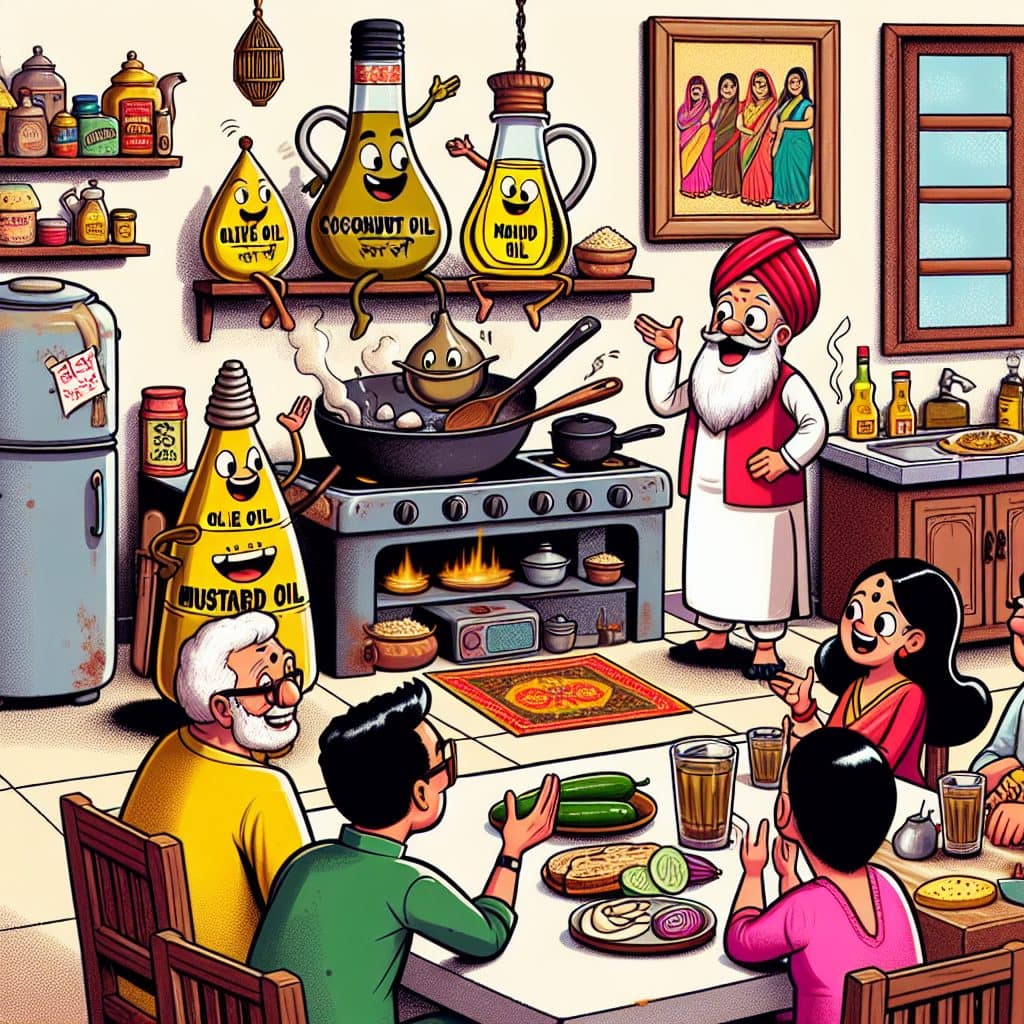
Image for What Is the Cooking Oil Debate Really About? - cooking oils truth — olive oil vs mustard oil vs coconut oil vs refined oils — which one should Indians actually use

What Is the Cooking Oil Debate Really About?

Let’s get one thing straight before we go any further. The cooking oil debate isn’t really about which oil is “best.” That question makes about as much sense as asking “Which is the best vehicle — auto-rickshaw, Maruti Swift, or Indian Railways?” Best for WHAT? For whom? In what situation?

An auto-rickshaw is perfect for a 2-km ride through Chandni Chowk traffic. Put it on the Delhi-Mumbai expressway and you’ll die. A Maruti Swift is great for daily commutes. Try fitting a joint family of fourteen in it for a wedding trip and you’ll wish you’d booked a train. Indian Railways can move 800 people across 2,000 km — but you wouldn’t take it to buy sabzi from the market.

Cooking oils work EXACTLY the same way.

Every oil has a job it does brilliantly and a job it does terribly. The problem is that we’ve been told there’s ONE magical oil that does everything — sautéing, deep frying, salad dressing, tadka, baking, and probably fixing your marriage. There isn’t. There never was. And anyone selling you that story is selling you a bottle, not the truth.

The cooking oils truth comes down to three things that actually matter:

  • Smoke point — the temperature at which an oil starts breaking down and releasing harmful compounds. Cross this, and your “healthy” oil becomes a chemistry experiment.
  • Fatty acid profile — the ratio of saturated, monounsaturated (MUFA), and polyunsaturated (PUFA) fats. This determines what the oil does inside your body.
  • Processing method — cold-pressed, expeller-pressed, refined, or solvent-extracted. This determines what’s LEFT in the oil by the time it reaches your kitchen.

That’s it. That’s the entire framework. Everything else is marketing.

The Vehicle Analogy — Your Quick Reference

We’re going to use this vehicle analogy throughout, so burn it into your brain:

  • Mustard oil = the Ambassador. Old school, Indian, built for Indian roads, tough as nails, your grandfather swore by it, and science says grandpa was mostly right.
  • Coconut oil = the auto-rickshaw. Absolutely brilliant for short trips and specific jobs. Terrible if you think it’s the answer to everything.
  • Olive oil (extra virgin) = the imported sedan. Beautiful engineering, genuinely excellent — but only on the right roads. Put it on the wrong road and you’ve wasted your money.
  • Refined oils = the rental car with a suspiciously clean exterior. Looks fine. Runs okay. But pop the hood and you have NO idea what’s been done to the engine.
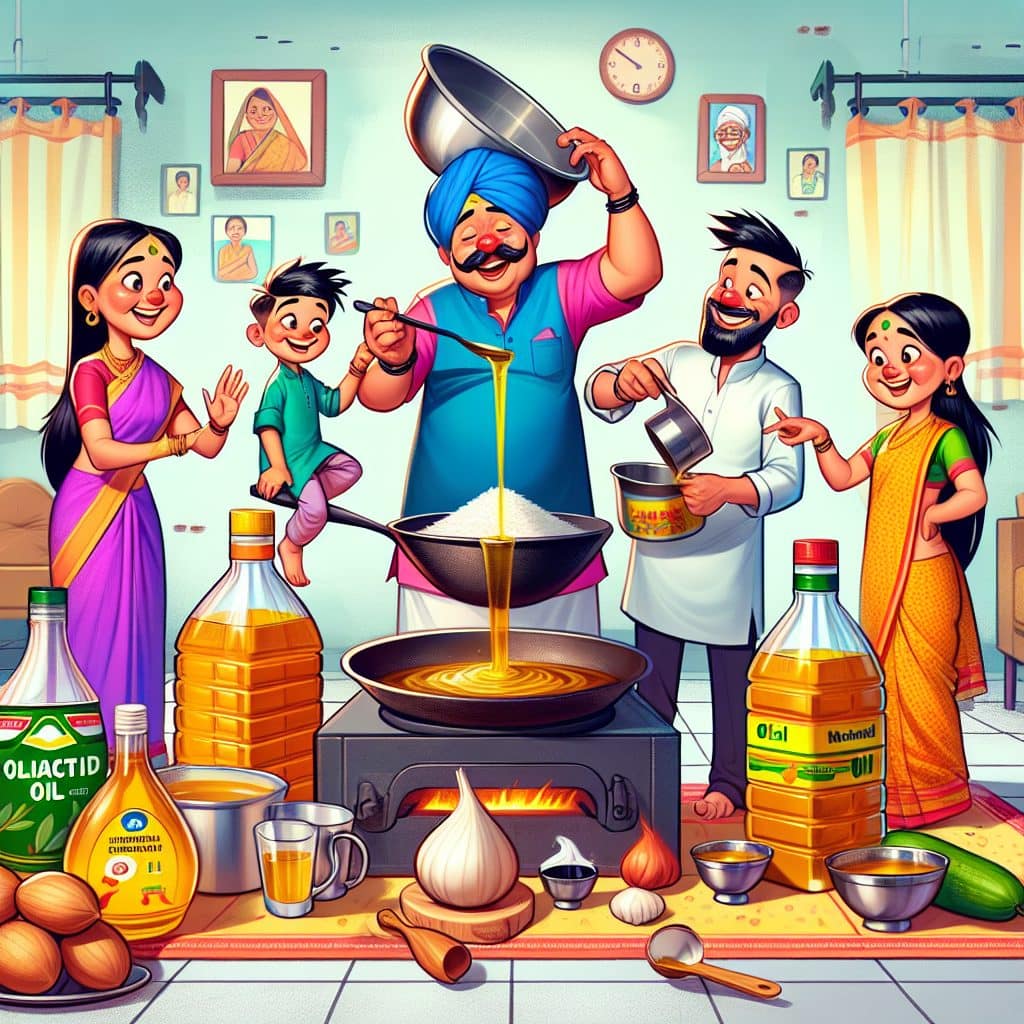
Image for Why Should You Care About Which Cooking Oil You Use? - cooking oils truth — olive oil vs mustard oil vs coconut oil vs refined oils — which one should Indians actually use

Why Should You Care About Which Cooking Oil You Use?

Here’s a number that should make you put down your phone and stare at your kitchen shelf: the average Indian family uses 15 to 20 litres of cooking oil per person per year. For a family of four, that’s 60 to 80 litres annually. Over a decade, that’s 600 to 800 litres of oil passing through your family’s bodies.

Let that sink in. That’s not a dietary footnote. That’s a river. A slow, steady, decade-long river of fat flowing through your arteries, your liver, your heart. And you’re telling me you chose which oil to pour into that river based on a WhatsApp forward from Vinod Chacha?

India has seen a dramatic rise in heart disease, Type 2 diabetes, and inflammatory conditions over the last 40 years — and the timeline maps almost perfectly onto our national shift from traditional cold-pressed oils (mustard, groundnut, coconut, sesame) to industrially refined oils (soybean, sunflower, “vegetable” oil blends). Correlation isn’t causation — your science teacher was right about that — but when the correlation is this strong, this consistent, and backed by metabolic research, you’d be a fool to ignore it.

The Indian Council of Medical Research (ICMR) and the National Institute of Nutrition (NIN) have been saying for years that Indians need to reduce total oil consumption AND improve the quality of oil they use. But that message doesn’t sell. You know what sells? “SWITCH TO THIS ONE OIL AND NEVER WORRY AGAIN!”

Nobody’s buying a headline that says “Use less oil, rotate between 2-3 good ones, and match the oil to your cooking method.” But that’s the cooking oils truth. Boring. Practical. Life-saving.
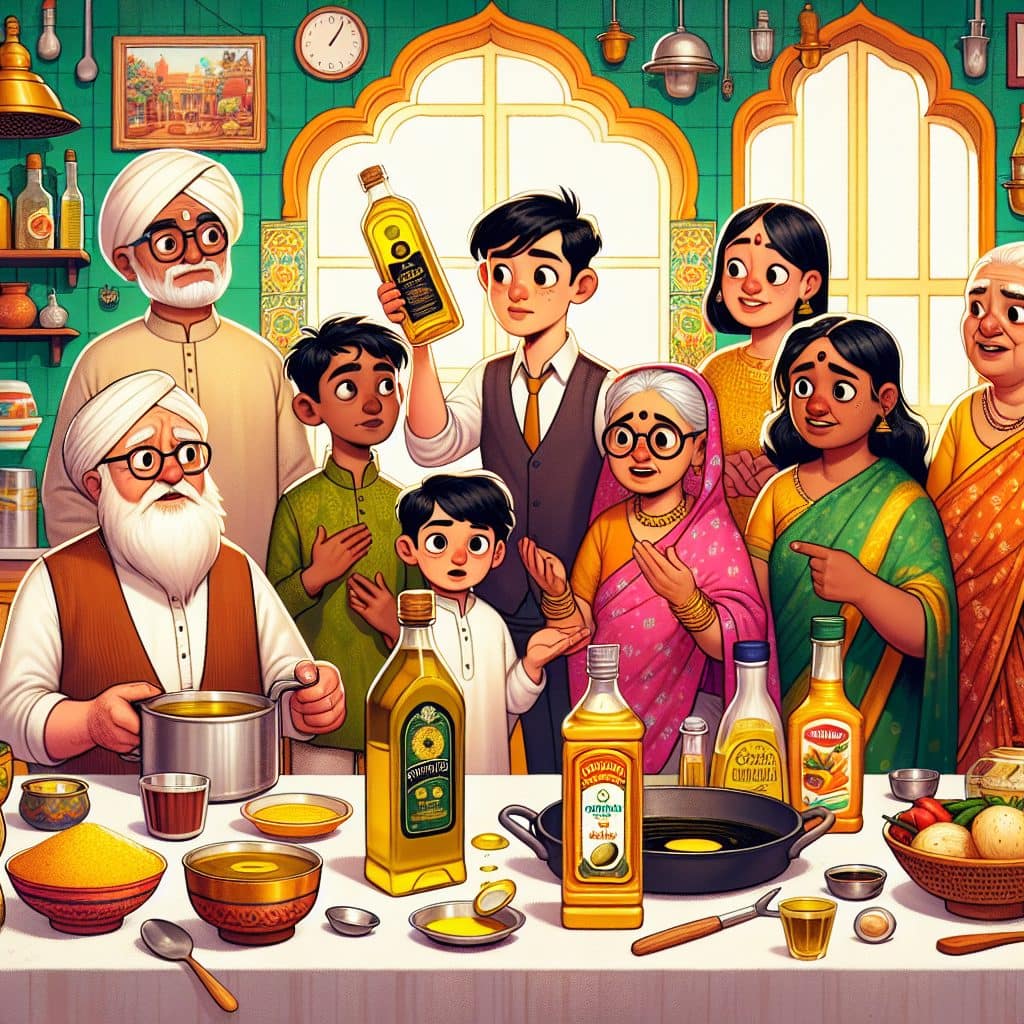
Image for Uncle's Logic vs Reality Check - cooking oils truth — olive oil vs mustard oil vs coconut oil vs refined oils — which one should Indians actually use

Uncle’s Logic vs Reality Check

Time to enter the battlefield. Your family WhatsApp group “Sharma Parivar 🙏🏠❤️” has opinions. Strong ones. Let’s address them.

Myth #1: “Olive oil is the healthiest oil in the world — use it for everything”

Uncle’s Logic: “Beta, Europeans use olive oil and they don’t have heart attacks. We should also switch to olive oil for all cooking. I read it on Google.”

Reality Check: Europeans also walk 8,000-12,000 steps daily, eat dinner at 8 PM instead of 10:30 PM, and don’t deep fry samosas at a cousin’s surprise mundan ceremony. If imported = better, then drink imported American cola daily and see what happens to your health. Extra virgin olive oil has a smoke point of around 160-190°C. Indian tadka hits 200°C+. Deep frying hits 180-220°C. That means every time you heat EVOO past its smoke point, you’re breaking down the very polyphenols and antioxidants you paid ₹900 for, and generating aldehydes — toxic compounds that are genuinely harmful. EVOO is BRILLIANT for salad dressings, light sautéing, drizzling over cooked food, and low-heat cooking. It is NOT your deep frying oil. Stop making it do a job it was never designed for.

One line summary: Olive oil is the imported sedan — magnificent on smooth highways, destroyed on potholed village roads. Match the oil to the job.

Myth #2: “Mustard oil is banned in many countries — it must be dangerous”

Uncle’s Logic: “Arrey, mustard oil is banned in America and Europe! If goras have banned it, there must be something wrong. We should stop using it.”

Reality Check: Mustard oil is sold in the US and EU as “for external use only” — not because it’s toxic, but because of regulatory standards around erucic acid content that were set based on 1970s rat studies using doses no human would ever consume. If banned in the West = dangerous, then we should also ban turmeric (not approved as medicine by the FDA), raw milk (illegal to sell in many US states), and mangoes (were literally banned from US import until 2007). The erucic acid concern was based on studies where rats were fed erucic acid as 50% of their total caloric intake. FIFTY PERCENT. You’d need to drink mustard oil like water to replicate that. Modern low-erucic acid mustard oil varieties exist, and traditional Indian consumption levels have never shown the cardiac damage seen in those extreme rat studies. Meanwhile, mustard oil is rich in MUFA, has a high smoke point (~250°C), contains natural antimicrobial compounds, and has been the backbone of North Indian cooking for centuries. Your great-grandmother used it. She was fine. She was probably tougher than you.

One line summary: Mustard oil is the Ambassador — not glamorous, built for Indian conditions, and your dadi knew what she was doing.

Myth #3: “Coconut oil is a superfood — use it for everything”

Uncle’s Logic: “Haan bhai, coconut oil cures everything. South Indians use it and they’re so healthy. I’m putting it in my coffee also now.”

Reality Check: Coconut oil is about 82% saturated fat. That’s higher than butter. Higher than ghee. Now, before the coconut cult comes for me — not all saturated fat is created equal. Coconut oil contains medium-chain triglycerides (MCTs), particularly lauric acid, which the body processes differently than long-chain saturated fats. There IS some evidence that MCTs are metabolized faster. But “metabolized faster” does not mean “eat unlimited amounts with zero consequences.” If natural saturated fat = unlimited, then deep fry everything in ghee three times a day and see what your cardiologist says. Virgin coconut oil is excellent for moderate-heat cooking, South Indian preparations, and specific uses. It’s an auto-rickshaw — perfect for short, specific trips. But making it your ONLY oil, pouring it into coffee, slathering it on toast, and cooking every meal in it because a Bali wellness influencer told you to? That’s taking the auto-rickshaw on the expressway.

One line summary: Coconut oil is great in the rotation, disastrous as the only player on the team.

Myth #4: “Refined oil is clean and safe because it’s clear and odourless”

Uncle’s Logic: “Beta, refined oil is pure. See how clear it is! No smell, no colour. That means all the impurities are removed.”

Reality Check: You know what else is clear, odourless, and has had everything removed from it? Vodka. That doesn’t make it healthy. Refining oil involves degumming, bleaching, deodorizing, and sometimes solvent extraction using hexane — a petrochemical. This process removes colour, flavour, odour — and also removes a massive chunk of the vitamins, antioxidants, polyphenols, and phytosterols that made the original oil beneficial. If refined = safe, then why did India’s massive national shift from cold-pressed traditional oils to refined soybean and sunflower oils over the last four decades coincide almost perfectly with our explosion of cardiovascular disease and metabolic syndrome? The oil LOOKS cleaner. What it does inside your body is a very different story. You’ve essentially traded a rough-looking but mechanically solid Ambassador for a rental car that looks spotless but has a cracked engine block.

One line summary: Clear and odourless doesn’t mean clean. It means stripped. Your oil had a personality; the refinery beat it out of it.
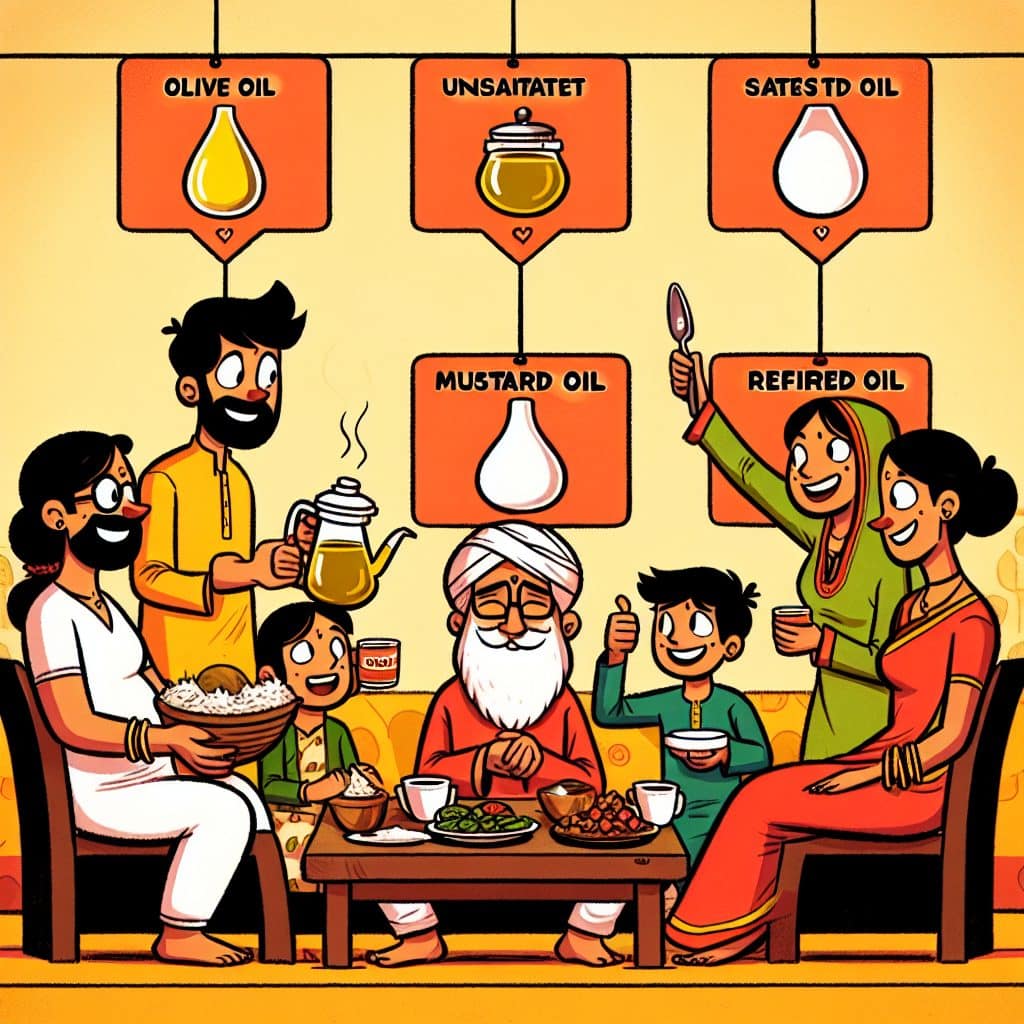
Image for The Science Nobody Tells You (Because It Doesn't Sell Programs) - cooking oils truth — olive oil vs mustard oil vs coconut oil vs refined oils — which one should Indians actually use

The Science Nobody Tells You (Because It Doesn’t Sell Programs)

Alright, let’s get into the biology. No WhatsApp university degree required — just your actual brain.

Fatty Acid Profiles — What Actually Matters

Every cooking oil is a combination of three types of fat:

  1. Saturated Fatty Acids (SFA) — solid at room temperature, stable under heat, but excess consumption is linked to increased LDL cholesterol.
  2. Monounsaturated Fatty Acids (MUFA) — the darling of heart health. Linked to reduced LDL, improved insulin sensitivity, and lower inflammation.
  3. Polyunsaturated Fatty Acids (PUFA) — includes Omega-3 and Omega-6. Essential (your body can’t make them), but the RATIO between Omega-6 and Omega-3 matters enormously.

Here’s the breakdown that nobody puts on a label:

Mustard Oil (cold-pressed/kachi ghani):

  • ~60% MUFA (including erucic acid) | ~21% PUFA | ~12% SFA
  • Has an almost ideal Omega-6 to Omega-3 ratio (~1.2:1 to 2:1)
  • Smoke point: ~250°C — excellent for Indian high-heat cooking
  • Contains allyl isothiocyanate — natural antimicrobial, anti-inflammatory

Coconut Oil (virgin, cold-pressed):

  • ~82% SFA | ~6% MUFA | ~2% PUFA
  • Rich in lauric acid (MCT) — faster metabolic pathway than long-chain SFA
  • Smoke point: ~175°C (virgin) to ~230°C (refined)
  • Best for moderate-heat cooking and specific regional cuisines

Extra Virgin Olive Oil:

  • ~73% MUFA (oleic acid) | ~11% PUFA | ~14% SFA
  • Loaded with polyphenols, oleocanthal (natural anti-inflammatory), and vitamin E
  • Smoke point: ~160-190°C — NOT suitable for deep frying or high-heat tadka
  • Best used raw, drizzled, or in light sautéing

Refined Soybean/Sunflower Oil:

  • ~50-65% PUFA (overwhelmingly Omega-6) | ~20-25% MUFA | ~10-15% SFA
  • Omega-6 to Omega-3 ratio: as high as 20:1 or worse
  • Most antioxidants and micronutrients stripped during refining
  • High Omega-6 load is linked to increased systemic inflammation

The Omega-6 Problem Nobody Talks About

What excess Omega-6 DOES in your body:

  • Promotes pro-inflammatory pathways (prostaglandins, leukotrienes)
  • Competes with Omega-3 for the same enzymes — so even if you eat fish, excess Omega-6 blocks Omega-3 utilization
  • Oxidizes more easily when heated, forming harmful lipid peroxides
  • Contributes to chronic low-grade inflammation — linked to heart disease, Type 2 diabetes, obesity, and autoimmune conditions

What excess Omega-6 does NOT do:

  • Does NOT make your oil “heart healthy” just because it’s unsaturated
  • Does NOT automatically lower cholesterol in a meaningful, protective way when the ratio is skewed
  • Does NOT mean “better than saturated fat” when consumed in the wildly imbalanced amounts most Indians currently consume

The ideal Omega-6 to Omega-3 ratio is between 1:1 and 4:1. Most Indians eating refined soybean or sunflower oil as their primary cooking oil are hitting ratios of 15:1 to 20:1. That’s not nutrition. That’s inflammation on autopilot.

Remember Sunita from the D-Mart aisle? She switched her entire kitchen to refined sunflower oil three years ago because the bottle said “heart healthy” with a little red heart logo. Her husband Vinod’s latest blood work showed elevated inflammatory markers and borderline triglycerides. Their oil choice isn’t the only factor — but 60-80 litres a year flowing through your family? It’s not a footnote. It’s a headline.
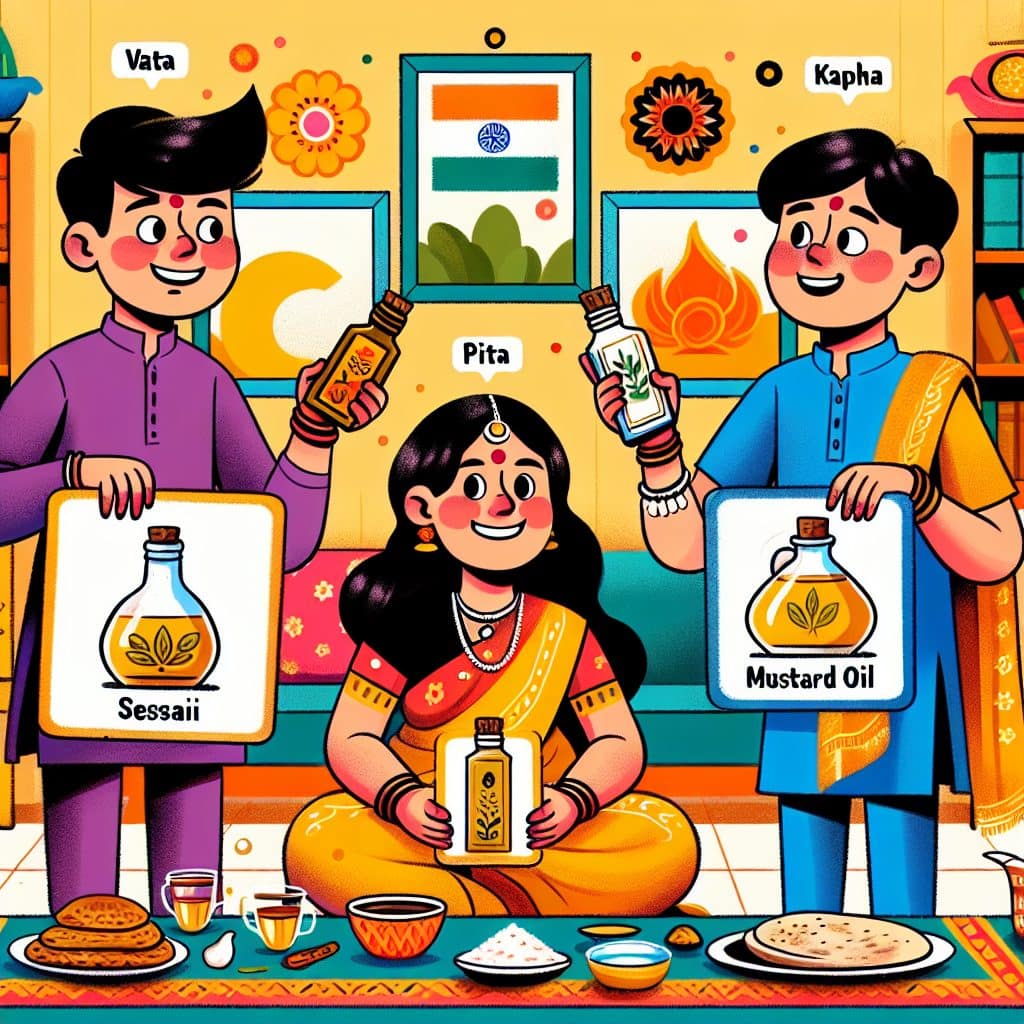
Image for Cooking Oils and Your Body: The Uncomfortable Truth - cooking oils truth — olive oil vs mustard oil vs coconut oil vs refined oils — which one should Indians actually use

Cooking Oils and Your Body: The Uncomfortable Truth

What Ayurveda ACTUALLY Said

What Ayurveda ACTUALLY said: Different oils suit different body constitutions (prakriti), different seasons, and different geographical regions. Sesame oil for Vata. Coconut oil for Pitta. Mustard oil for Kapha. Oil should be consumed in moderation. Regional oils — oils that grow where you live — are most compatible with your body. This is called “desha-anusar ahara” — food according to your land.

What your WhatsApp group THINKS it said: “COCONUT OIL CURES ALL 108 DISEASES MENTIONED IN AYURVEDA! SHARE BEFORE GOVERNMENT REMOVES THIS POST! 🙏🙏🙏🔱”

Common ground: Both Ayurveda and modern nutritional science agree on one thing — there is no single universal “best” oil. Regional diversity, moderation, and minimal processing are principles that haven’t changed in thousands of years. Your great-grandmother rotated oils seasonally without reading a single PubMed paper. She was doing evidence-based nutrition before evidence-based nutrition had a name.

The Uncomfortable Numbers

Here’s what the data actually shows when you strip away the marketing:

  • India’s consumption of refined soybean and sunflower oil increased by over 300% between 1980 and 2020.
  • In the same period, cardiovascular disease became the #1 cause of death in India, accounting for nearly 28% of all deaths.
  • The NIN (National Institute of Nutrition) recommends a daily oil intake of 20-25 grams per person (about 4-5 teaspoons). The average Indian urban household consumes 30-50 grams per person daily. That’s almost double the recommendation.
  • A 2019 study published in The Lancet ranked India among the top countries for diet-related deaths, with excess sodium, insufficient whole grains, and poor fat quality as leading dietary risk factors.

The uncomfortable truth? Your cooking oil problem is two problems pretending to be one:

  1. You’re using too much oil. Every Indian recipe video starts with “take 3-4 tablespoons of oil.” That’s already your entire day’s allowance for one dish.
  2. The oil you ARE using has been stripped of everything useful and loaded with inflammatory Omega-6.

Fix both. Not one. Both.

Vinod, by the way, has started telling people at dinner parties that he’s “switched to olive oil for health reasons.” He deep fries his favourite mathri in it at 220°C. The olive oil weeps silently. The polyphenols are gone. The ₹900 is gone. Vinod’s smugness remains.
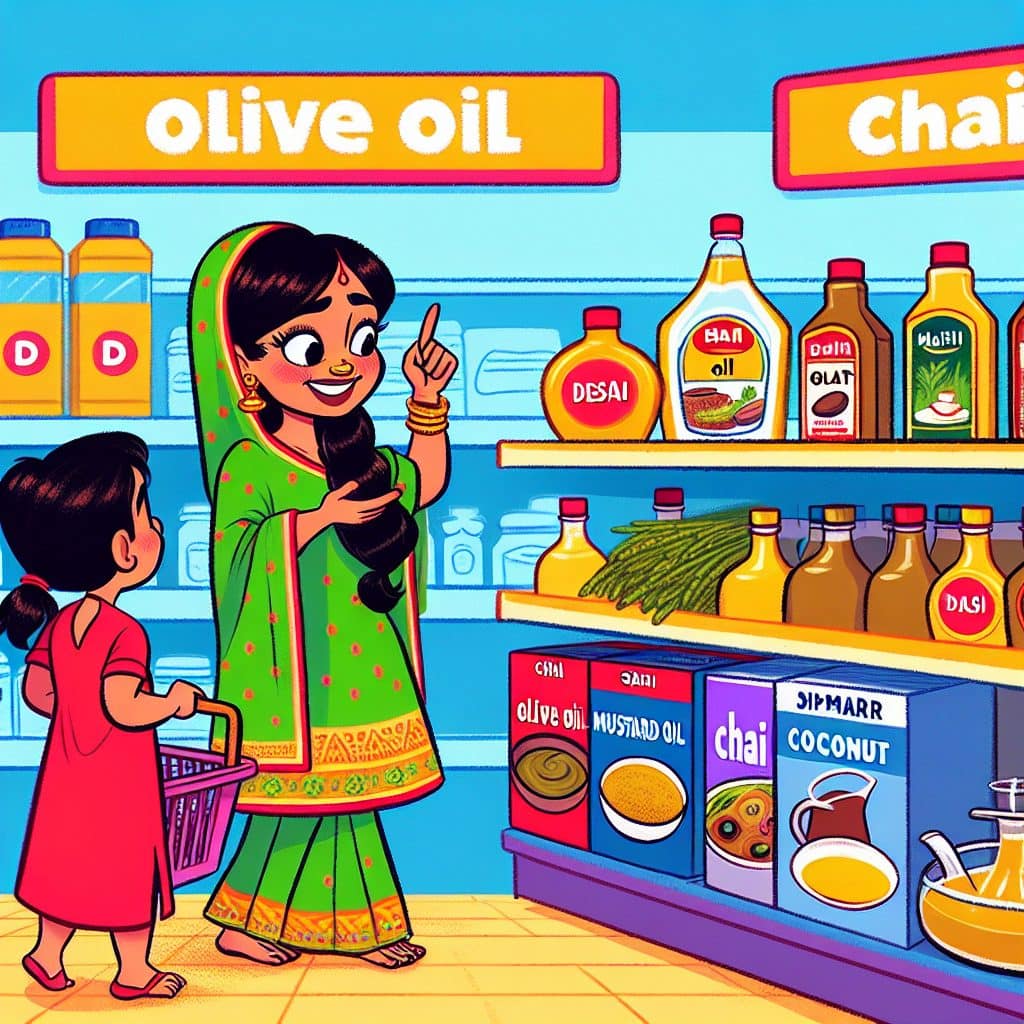
Image for Battle Strategies: Real-World Implementation for Actual Humans - cooking oils truth — olive oil vs mustard oil vs coconut oil vs refined oils — which one should Indians actually use

Battle Strategies: Real-World Implementation for Actual Humans

Enough theory. You’re Sunita. You’re standing in D-Mart. What do you actually PUT IN THE CART?

The Two-Oil System (Minimum Viable Strategy)

If you do nothing else — and I mean NOTHING else — do this:

  1. One high-heat oil for daily Indian cooking (tadka, sautéing, shallow frying, roti-making): Cold-pressed mustard oil (kachi ghani) OR cold-pressed groundnut/peanut oil (filtered) OR cold-pressed sesame/til oil — pick based on your region and palate.
  2. One finishing/low-heat oil for drizzling, salads, raita, light sautéing: Extra virgin olive oil OR virgin coconut oil (for South Indian households).

That’s it. Two oils. Done. You’ve already beaten 80% of Indian kitchens.

The Three-Oil Rotation (Optimal Strategy)

For the overachievers — and I say this with love, Sunita — here’s the ideal rotation:

  • Daily cooking (high heat): Cold-pressed mustard oil OR cold-pressed groundnut oil — rotate monthly
  • Occasional deep frying (if you must): Groundnut oil (smoke point ~230°C) or refined coconut oil (smoke point ~230°C). Yes, I said refined coconut oil for THIS specific use — the high smoke point matters more here than the polyphenol content you’d lose anyway at frying temperatures.
  • Raw/finishing use: Extra virgin olive oil for Mediterranean-style dishes, salads, drizzling. Virgin coconut oil for South Indian chutneys, certain desserts.
  • Ghee: 1-2 teaspoons daily for tadka, dal, roti. Ghee is not the villain. Ghee in a tablespoon is nutrition. Ghee by the ladle is self-sabotage.

The Weekly Reality Check

Here’s what a realistic week looks like for a North Indian family of four:

  • Monday-Friday daily cooking: 2-3 teaspoons kachi ghani mustard oil per meal (tadka, sabzi, paratha). Total: ~15-20 ml per person per day. WITHIN the NIN guideline.
  • Weekend treat (one deep-fried item): Groundnut oil, used ONCE, strained, stored in dark bottle, reused MAXIMUM one more time. Then discarded. Not reused seven times until it turns the colour of motor oil. THAT is how you get trans fats from oil that started with zero trans fats.
  • Salad/raita nights: 1 teaspoon EVOO drizzled on top. NOT heated. NOT “sautéed a little.” Drizzled. On top. After cooking is done.
  • Ghee: 1 teaspoon on dal, 1 teaspoon on roti, 2-3 times a week. Homemade if possible. Not the vanaspati-adulterated stuff.

What to Look for on the Label (The 10-Second Check)

  1. The words “cold-pressed” or “kachi ghani” or “wood-pressed” — these mean the oil was extracted mechanically, without chemical solvents.
  2. FSSAI mark — non-negotiable. Don’t buy unlabelled loose oil from dubious sources.
  3. Dark glass or tin packaging — light degrades oil. Clear plastic bottles are the worst storage medium.
  4. NO mention of “solvent extracted” anywhere on the label.
  5. Check manufacturing date, not just expiry. Cold-pressed oils are best used within 3-6 months.

Budget Reality

Yes, cold-pressed oils cost more than refined. A litre of kachi ghani mustard oil runs ₹180-280. Refined sunflower oil is ₹120-150. But here’s the math nobody does: if you reduce your oil consumption from 40 ml/person/day to the recommended 25 ml/person/day, you use 37% less oil monthly. A better oil at lower volume costs roughly the SAME as a worse oil at higher volume. Your wallet doesn’t suffer. Your arteries thank you. That’s not a health hack. That’s just arithmetic.

Image for Common Mistakes Indians Make With Cooking Oils - cooking oils truth — olive oil vs mustard oil vs coconut oil vs refined oils — which one should Indians actually use

Common Mistakes Indians Make With Cooking Oils

Let’s do a quick WhatsApp group reality check. Here’s an actual conversation from “FIT BROS 💪” — a group of 23 grown men arguing about cooking oil at 11:47 PM on a Tuesday:

Friend 1: “Bro, I switched to olive oil completely. Full healthy mode on 🫒💪”
Friend 2: “Haan yaar, same. Wife makes aloo paratha in olive oil now. Tastes different but health first”
Friend 3: “My trainer said only coconut oil. Everything else is poison. He’s putting it in his protein shake also”
Friend 1: “Coconut oil in shake?? That’s next level bro”
Friend 4: “My uncle is a doctor. He said oil doesn’t matter. Just exercise.”

Every single person in this conversation is wrong. Here’s the complete mistake list:

  1. Using EVOO for deep frying or high-heat Indian cooking. You’re burning money and creating harmful compounds. Stop it.
  2. Reusing deep-frying oil 5-7 times. Each reheating cycle increases free radical content, trans fat formation, and polar compounds. Maximum 1-2 reuses for deep frying oil. Then THROW IT AWAY. Your thriftiness is not worth a cardiac event.
  3. Believing “cholesterol-free” labels. ALL plant oils are cholesterol-free. Cholesterol only comes from animal sources. Putting “cholesterol-free” on a bottle of vegetable oil is like putting “contains no gravel” on a bottle of water. It’s technically true and completely meaningless.
  4. Using only ONE oil for everything. No single oil has the perfect fatty acid profile. Rotating 2-3 oils gives you a broader spectrum of fatty acids and micronutrients. Your body isn’t asking for loyalty to one brand. It’s asking for variety.
  5. Storing oil in clear plastic bottles on the kitchen counter next to the stove. Heat + light + plastic = accelerated oxidation. Store oil in dark glass or tin, in a cool cabinet, away from the stove. This isn’t fussy. This is basic chemistry.
  6. Confusing “natural” with “unlimited.” Ghee is natural. Coconut oil is natural. Mustard oil is natural. Gravity is natural. Walk off a building and gravity will still kill you. Natural ≠ consequence-free. Dose matters. ALWAYS.
  7. Ignoring QUANTITY. The single biggest cooking oil mistake in India isn’t the wrong TYPE of oil — it’s the AMOUNT. Pouring oil like you’re filling a swimming pool, regardless of which oil it is, will mess with your lipid profile. The NIN says 20-25 ml per person per day. Measure it for one week. You will be horrified at how much you’ve been using.
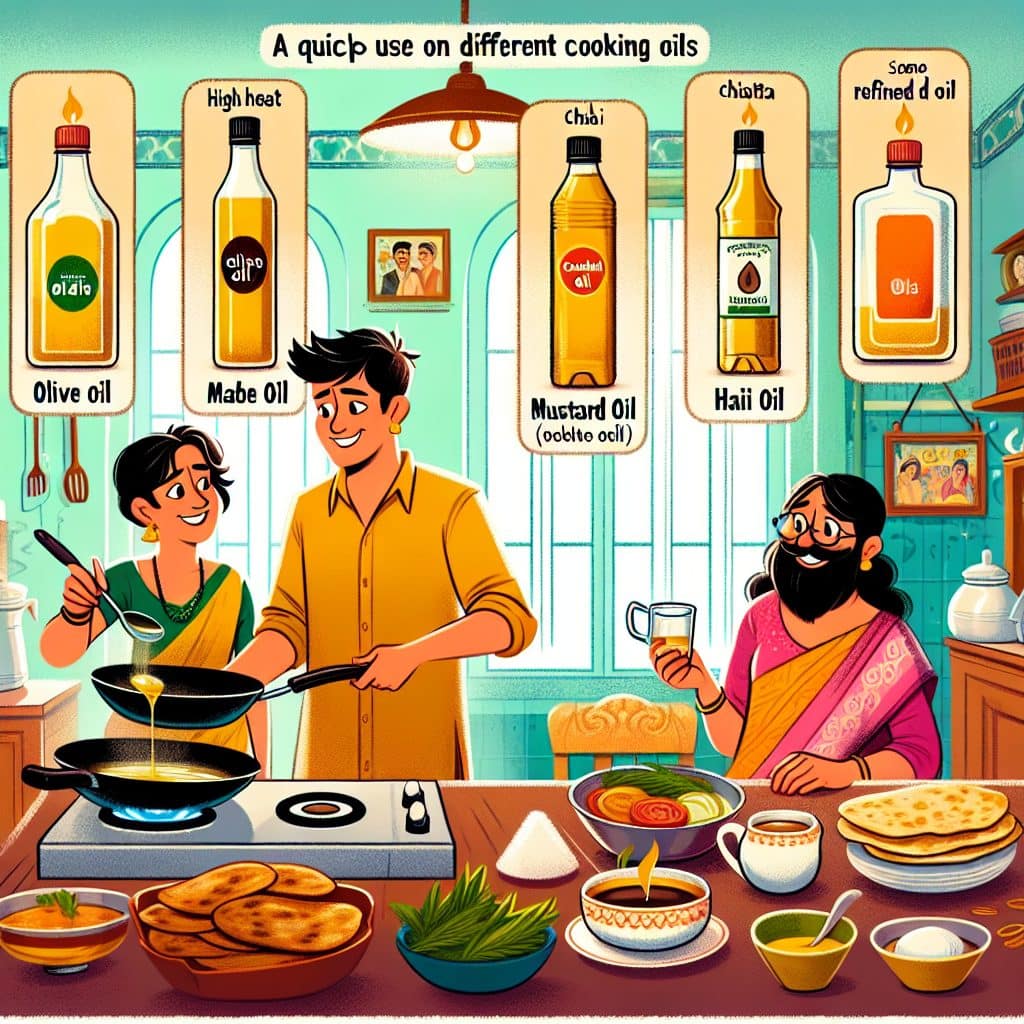
Image for Quick Summary - cooking oils truth — olive oil vs mustard oil vs coconut oil vs refined oils — which one should Indians actually use

Quick Summary

Because I know you’re going to screenshot this section and send it to your family WhatsApp group — and honestly, for once, that would actually be a useful WhatsApp forward — here’s the cooking oils truth in one clean table:

🟢 DAILY COOKING (High Heat — Tadka, Sautéing, Paratha):
Cold-pressed mustard oil, cold-pressed groundnut oil, cold-pressed sesame oil. Pick one based on your region. Rotate monthly.

🟡 OCCASIONAL DEEP FRYING (Once a week max, please):
Groundnut oil or refined coconut oil. Use once or twice. Discard. Do NOT reuse until it resembles crude petroleum.

🟢 RAW / FINISHING (Salads, Drizzle, Raita):
Extra virgin olive oil. Virgin coconut oil for South Indian use. NEVER heated past light sautéing temperatures.

🟢 GHEE (Because we’re Indian and this is non-negotiable):
1-2 teaspoons daily. Homemade or trusted brand. On dal, roti, rice. NOT by the ladle.

🔴 AVOID OR MINIMIZE:
Refined soybean oil, refined sunflower oil, refined “vegetable” oil blends, anything labelled “solvent extracted,” vanaspati/hydrogenated fat, any oil in a clear plastic bottle that’s been sitting in sunlight at a shop for three months.

📏 QUANTITY (The most important line in this entire post):
20-25 ml per person per day. Total. All oils combined. Measure it for one week. Then cry. Then adjust.
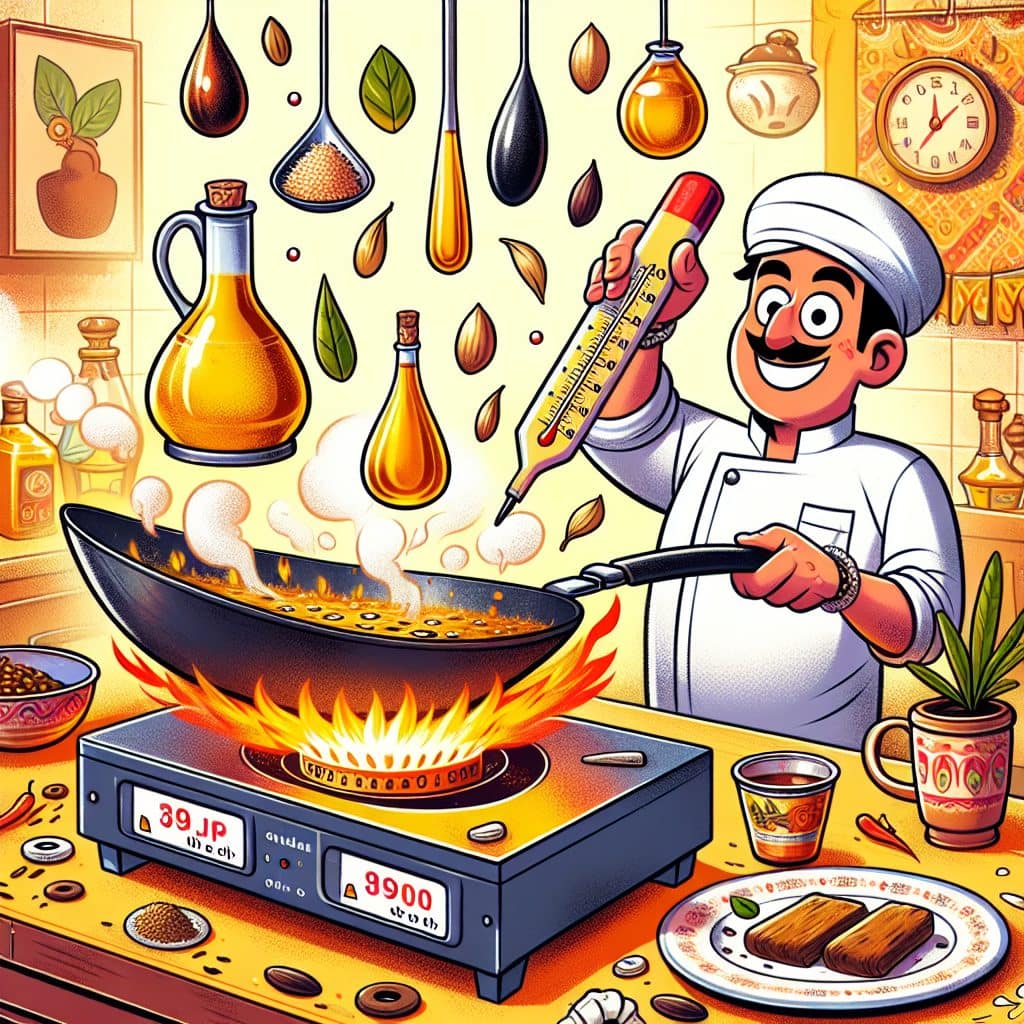
Image for FAQ: Questions Your WhatsApp Group Is Too Embarrassed to Ask - cooking oils truth — olive oil vs mustard oil vs coconut oil vs refined oils — which one should Indians actually use

FAQ: Questions Your WhatsApp Group Is Too Embarrassed to Ask

Q: “Can I use just olive oil for all my cooking? I can afford it.”

A: This isn’t about money, yaar. It’s about chemistry. Extra virgin olive oil has a smoke point of ~160-190°C. Your kadhai hits 200-220°C for tadka and frying. Past the smoke point, EVOO’s beneficial polyphenols break down and harmful aldehydes form. Use EVOO for raw applications and light sautéing. For high-heat Indian cooking, use mustard or groundnut oil with higher smoke points. Your wallet can afford olive oil. Your olive oil can’t afford your tadka temperature. Two different problems.

Q: “Is rice bran oil a good option? My doctor recommended it.”

A: Rice bran
The Great Indian Kitchen Oil Showdown: Olive vs Mustard vs Coconut – Which Oil Actually Wins for Your Health? Read More »

Introduction

Why Indians Are Sleeping Like It’s a Luxury: The Health Crisis Nobody’s Talking About

Image for Introduction - why Indians don't sleep enough and what it is doing to their health

Introduction

Meet Sunita Sharma, 38, HR manager from Noida, mother of two, proud owner of a Netflix watchlist longer than her grocery list, and a woman who hasn’t slept before 1:30 AM since approximately 2017.

Her mornings begin at 6:15 AM — not because she’s a “morning person,” but because Aarav needs to be at school by 7:30, the tiffin won’t pack itself, and her husband Vikram is absolutely, cosmically incapable of finding his own socks. By 9 AM, she’s on her third cup of chai, answering Slack messages from her boss who apparently believes “flexible work hours” means “available at all hours.” By 11 PM, after the kids are asleep, the kitchen is cleaned, and tomorrow’s outfits are sorted, Sunita finally — finally — gets her “me time.” Which is really just doom-scrolling Instagram Reels about meal prep she’ll never do, while her left eye twitches from exhaustion.

Sunita sleeps five hours and forty minutes on a good night. She calls this “managing well.” Her body calls this something very different.

And here’s the thing — Sunita isn’t an outlier. She IS India. A 2023 Fitbit study found that Indians are among the most sleep-deprived people on the planet, averaging just 6 hours and 55 minutes of sleep — and that’s the generous estimate that includes weekends when some of us manage to pass out for eight hours after a biryani coma. The weekday reality? Closer to six hours. Sometimes five. Sometimes that ungodly zone where you’re not sure if you slept or just blinked very slowly for four hours.

But who’s telling you this is a crisis? NOBODY. Because there’s no supplement for sleep that costs ₹2,999 a month. There’s no influencer doing “sleep transformations” with before-and-after photos. There’s no gym selling a “Premium Sleep Membership.” The wellness industry doesn’t make money when you simply close your eyes and do nothing — so they’d rather sell you ashwagandha gummies, blue-light glasses, and a ₹45,000 mattress than tell you the uncomfortable truth: you are slowly, methodically destroying your body six hours at a time, and the fix costs exactly zero rupees.

Image for What Is Sleep Deprivation? - why Indians don't sleep enough and what it is doing to their health

What Is Sleep Deprivation?

Let’s get something straight before your WhatsApp uncle forwards you an article about how Narendra Modi sleeps four hours and “look at his energy, beta” — sleep deprivation isn’t just about feeling tired. It’s a full-system biological meltdown that you’ve been normalizing since college.

Think of your body as a massive Indian railway station. Not a cute little suburban stop — we’re talking New Delhi Railway Station, the whole chaos. During the day, thousands of trains (your metabolic processes, immune responses, hormonal cycles, neural pathways) are running at full capacity. Platforms are packed. Signals are firing. The announcements are constant and slightly incomprehensible.

Now, sleep is the NIGHT SHIFT. It’s when the maintenance crew comes in. They repair the tracks. They clean the platforms. They update the signal systems. They clear the debris from the day. They reset the entire network so tomorrow’s 5:45 AM Shatabdi can leave on time.

When you sleep five hours instead of seven or eight, you’re telling that maintenance crew: “You have half the time. Fix everything. Good luck.”

Guess what happens? The tracks start cracking. The signals misfire. Trains start running late, then running into each other. And one day, Platform 3 just… collapses. That’s your immune system failing at 35. That’s your blood sugar going haywire at 40. That’s your memory turning into a sieve at 45.

Sleep deprivation isn’t a badge of honor. It’s deferred maintenance on the most complex system you’ll ever operate — and the bill ALWAYS comes due.

The Two Types of Sleep You’re Probably Messing Up

Your sleep isn’t one long unconscious blob. It cycles through stages, and two matter enormously:

  • Deep Sleep (Slow-Wave Sleep): This is physical repair mode. Muscle recovery, tissue growth, immune system strengthening, growth hormone release. This happens mostly in the first half of the night. Cut your sleep short at the front end — say, by going to bed at 2 AM — and you slash this phase.
  • REM Sleep (Rapid Eye Movement): This is brain repair mode. Memory consolidation, emotional processing, creative problem-solving. This happens mostly in the last 90-minute cycles — the ones you destroy every morning when your alarm goes off at 6:15 AM and you hit snooze four times.

So when Sunita sleeps from 1:30 AM to 6:15 AM, she’s getting butchered deep sleep AND butchered REM sleep. She’s essentially getting the nutritional equivalent of eating only the bread from a sandwich and throwing away everything inside. Technically she ate. Practically she got almost nothing.

Image for Why Should You Care? - why Indians don't sleep enough and what it is doing to their health

Why Should You Care?

Because, beta, this isn’t about “feeling fresh.” Sleep deprivation is currently doing things to Indian bodies that would make a horror movie director uncomfortable. And almost nobody is connecting the dots.

India’s Health Crisis Has a Sleep-Shaped Hole

Consider these numbers and try not to spit out your chai:

  • India is the diabetes capital of the world — over 101 million diagnosed cases. Sleep deprivation increases insulin resistance by up to 30% after just FOUR nights of poor sleep. But sure, let’s keep blaming sugar alone.
  • Heart disease kills more Indians than any other cause. Sleeping less than six hours increases cardiovascular risk by 20-48%. But haan, let’s focus only on cholesterol panels.
  • India has one of the highest rates of depression and anxiety globally, with a massive treatment gap. Chronic sleep deprivation literally shrinks the prefrontal cortex and amplifies the amygdala — meaning you become WORSE at rational thinking and BETTER at panicking. Congratulations.
  • Obesity rates in urban India have doubled in 20 years. Sleep-deprived people eat an average of 385 extra calories per day. That’s roughly one extra paratha with butter every single day — which, over a year, adds up to approximately 18 kg of potential weight gain. But nobody blames the 1:30 AM bedtime. They blame the paratha.

The paratha isn’t the problem, yaar. YOUR SCHEDULE is the problem.

The WhatsApp Group Diagnosis

Meanwhile, in “SHARMA FAMILY (MAIN) 🏠🙏”:

Vikram Chacha: “Forwarded as received — sleeping too much causes laziness and weight gain. Early to bed, early to rise. Our ancestors woke at 4 AM for Brahma Muhurta 🙏”

Sunita’s Mom: “Haan beta, your nani never slept more than 5 hours. She was fine till 89.”

Random Cousin Rahul: “Bro I sleep 4 hours and gym at 5 AM. Grind never stops 💪🔥”

Let’s unpack this beautiful disaster, shall we?

Nani also didn’t sit under artificial blue light for four hours before bed. Nani didn’t have a cortisol-spiking corporate job. Nani walked 6 km a day and ate seasonal food and lived in a world where “notification” meant someone was yelling from the neighbor’s balcony. Nani’s five hours were almost certainly more than your seven hours in terms of actual sleep quality. And also — with deepest respect — survivorship bias is not a health strategy. For every nani who lived to 89, there were others who didn’t, and nobody forwards those stories in the family group.

And Rahul? Bhai, your “grind” is just cortisol addiction wearing a motivational t-shirt. Sit down.

Image for The Simple Fix - why Indians don't sleep enough and what it is doing to their health

The Simple Fix

Arrey, don’t scroll away thinking “accha, so I need to buy a sleep tracker and do some meditation app thing.” No. The fix is not a purchase. The fix is a rearrangement. Let’s go back to our railway station analogy — you don’t need to build a new station. You need to give the maintenance crew their full shift back.

Uncle’s Logic vs Reality Check

Myth #1: “I function fine on 5-6 hours. I’m just built different.”

Uncle’s Logic: “Beta, sleep is for the weak. I’ve slept 5 hours since 1987 and look at me — perfectly fine.”

Reality Check: You are not “fine.” You have simply forgotten what “fine” feels like. Research from the University of Pennsylvania showed that people sleeping six hours a night for two weeks performed as poorly on cognitive tests as people who hadn’t slept for 48 hours straight — BUT THEY DIDN’T REALIZE IT. Your brain literally loses the ability to assess its own impairment. You’re not built different. You’re impaired and confident about it. That’s not a superpower, uncle. That’s drunk driving without the alcohol.

You’ve normalized your own decline. That’s not adaptation — that’s denial.

Myth #2: “I’ll catch up on weekends.”

Uncle’s Logic: “Arre, Saturday-Sunday mein cover kar lenge. Sleep debt is like EMI — you can pay it later.”

Reality Check: Sleep debt does NOT work like a bank loan, you absolute mango. A 2019 study in Current Biology found that “recovery sleep” on weekends failed to reverse the metabolic damage caused by weeknight sleep deprivation. In fact, people who did the sleep-binge-on-weekends pattern had WORSE insulin sensitivity than people who were consistently sleep-deprived. Your body doesn’t have a weekend mode. Your pancreas doesn’t know it’s Saturday. You cannot make a weekly installment on biological damage that compounds daily.

Sleep debt isn’t an EMI. It’s more like a credit card at 42% interest that doesn’t accept late payments.

Myth #3: “Chai/coffee fixes everything.”

Uncle’s Logic: “Ek cutting chai and I’m fresh as morning. Who needs 8 hours when you have Brooke Bond Red Label?”

Reality Check: Caffeine doesn’t give you energy. It blocks adenosine — the chemical that tells your brain you’re tired. The tiredness is STILL THERE, piling up behind the caffeine dam like water behind a wall. When the caffeine wears off — crash. So you drink more. The cycle continues. Meanwhile, caffeine consumed even 6 hours before bedtime reduces deep sleep by 20%. So your “4 PM chai to get through the evening” is actively sabotaging tonight’s sleep, which makes you need MORE chai tomorrow. You haven’t solved the problem. You’ve created a subscription to it.

Chai is masking your exhaustion, not fixing it. That’s not a solution. That’s concealer for your brain.

Myth #4: “Our ancestors slept less and were healthier.”

Uncle’s Logic: “Pehle log 4 baje uthte the, khet mein kaam karte the, kabhi beemar nahi hote the. Aaj kal ki generation soft hai.”

Reality Check: Your ancestors also went to bed when it got dark — around 7-8 PM — because they didn’t have Netflix, LED lights, or a WhatsApp group pinging at 11:45 PM with “Good Night” messages featuring roses and the Eiffel Tower. If dada ji woke at 4 AM and slept at 8 PM, that’s EIGHT HOURS, uncle. He wasn’t sleeping less. He was sleeping EARLIER. Massive difference. Also, he was physically exhausted from actual labor, which promotes deeper sleep quality. You’re mentally exhausted from replying to emails, which promotes shallow, anxious, garbage sleep. Not the same game. Not even the same sport.

Your ancestors weren’t tougher sleepers. They just didn’t have screens destroying their circadian rhythm.

Image for The Science Nobody Tells You (Because It Doesn't Sell Programs) - why Indians don't sleep enough and what it is doing to their health

The Science Nobody Tells You (Because It Doesn’t Sell Programs)

Here’s what happens inside your body when you consistently sleep less than seven hours. Not occasionally. Not during exam week. CONSISTENTLY — like the way most urban Indians have been doing for years.

What sleep deprivation DOES to your body:

  • Spikes cortisol levels — your stress hormone stays elevated, keeping you in a low-grade fight-or-flight mode. This directly increases belly fat storage. That stubborn tummy Sunita blames on “post-pregnancy metabolism”? A good chunk of it is cortisol from five years of 5-hour nights.
  • Destroys insulin sensitivity — after just 4 nights of sleeping 4.5 hours, healthy young adults showed insulin resistance comparable to pre-diabetics. FOUR NIGHTS. Not four years. Four nights.
  • Tanks your immune system — sleeping less than 6 hours makes you 4.2 times more likely to catch a cold when exposed to the virus. That “weak immunity” you keep complaining about at every season change? Maybe it’s not the weather, yaar. Maybe it’s the 1 AM bedtime.
  • Increases ghrelin, decreases leptin — ghrelin says “eat more,” leptin says “you’re full.” Sleep deprivation cranks up the hunger hormone and mutes the satiety hormone. You’re not weak-willed for craving samosas at 4 PM. Your hormones are SCREAMING for quick energy because your brain is running on fumes.
  • Impairs glymphatic clearance — during deep sleep, your brain literally washes itself, clearing out beta-amyloid plaques and metabolic waste. These plaques are associated with Alzheimer’s disease. Chronically poor sleep = decades of your brain sitting in its own waste. Pleasant image? Good. Remember it at midnight when you’re about to start another episode.

What sleep deprivation does NOT do:

  • Make you tougher, more productive, or more successful
  • Get compensated by supplements, adaptogens, or ₹3,000 ashwagandha gummies
  • Get fixed by sleeping 12 hours on Sunday (that’s called circadian disruption, and it makes Monday WORSE)
  • Show up on a blood test until the damage is already significant

Sunita, by the way, went to her doctor last month because she’s been gaining weight despite “eating clean” and walking 6,000 steps a day. Her fasting insulin was elevated. Her HbA1c was creeping up. The doctor said “watch your diet.” Nobody — NOBODY — asked her what time she goes to bed. Because in Indian medicine, sleep is still treated as a lifestyle preference, not a biological necessity. That’s not how any of this works.

Image for Sleep and Your Body: The Uncomfortable Truth - why Indians don't sleep enough and what it is doing to their health

Sleep and Your Body: The Uncomfortable Truth

Here’s what nobody in the Indian wellness space wants to admit: sleep is the single highest-leverage health intervention available to most Indians, and it’s being systematically ignored because it can’t be monetized.

Think about it. Every other health variable gets attention:

  • Diet? Billion-dollar industry. Keto plans, intermittent fasting apps, protein powders, meal delivery services.
  • Exercise? Cult.fit, gym chains, yoga studios, home equipment, personal trainers.
  • Supplements? Don’t even get me started. The Indian supplement market is worth over ₹40,000 crore and growing.
  • Sleep? “Just sleep more, bro.” That’s the entire offering. Because what are you going to sell? Darkness? Silence? Doing nothing?

What Ayurveda ACTUALLY said: Sleep (Nidra) is one of the three pillars of life (Trayopastambha), alongside food (Ahara) and celibacy/energy management (Brahmacharya). Charaka Samhita explicitly states that proper sleep is the foundation of happiness, nourishment, strength, virility, knowledge, and life itself. Not a luxury. A PILLAR.

What your WhatsApp group THINKS it said: “Wake up at 4 AM for Brahma Muhurta and drink warm water. That’s the ancient secret.” — forwarded with 17 lotus emojis and zero mention of when to actually GO TO SLEEP.

Common ground: Both Ayurveda and modern sleep science agree — sleep timing matters, sleep consistency matters, and sleep is non-negotiable for health. Ayurveda said it 3,000 years ago. Science proved it with polysomnography. Your WhatsApp group ignored both.

The uncomfortable truth for most urban Indians is this: you are not sleeping poorly because of a medical condition. You are sleeping poorly because of choices that feel like obligations — the late-night TV, the scroll session, the “one more episode,” the work email at 11 PM that you could answer at 8 AM, the belief that “me time” can only happen after midnight because the rest of your day belongs to everyone else.

Sunita doesn’t have insomnia. Sunita has a boundary problem disguised as a sleep problem. And so do most of us.

Image for Common Mistakes - why Indians don't sleep enough and what it is doing to their health

Common Mistakes

Even when Indians TRY to fix their sleep, they make it worse. Here’s the hall of shame:

Mistake #1: The “Melatonin Will Save Me” Delusion

Melatonin is not a sleeping pill. It’s a timing signal. Taking 10 mg of melatonin because your friend on Instagram said so is like blasting an air horn to tell your body it’s nighttime. Your body naturally makes 0.1-0.3 mg. You’re taking 30-100x that amount. Short-term? Maybe helps with jet lag. Long-term, high-dose, unsupervised? You’re messing with your endocrine system for no good reason. Put the gummies down.

Mistake #2: Exercising at 10 PM Because “At Least I’m Moving”

Vigorous exercise raises core body temperature and cortisol for 2-3 hours. Your body needs to COOL DOWN to initiate sleep. That 10 PM HIIT workout on YouTube is basically telling your nervous system “WAKE UP AND FIGHT A TIGER” right before you want it to power down. Move your workout to morning or late afternoon. If evening is your only option, keep it to walking or gentle yoga — not burpees that make you question your life choices.

Mistake #3: The Revenge Bedtime Procrastination Trap

This is Sunita’s exact disease and it has a clinical name now — revenge bedtime procrastination. When you feel you had no control over your day, you “reclaim” time by staying up late, even though you’re doing nothing productive. You’re not reclaiming anything. You’re borrowing tomorrow’s energy to scroll through today’s reels. That’s not empowerment. That’s a payday loan on your health.

Mistake #4: Keeping the AC at 16°C or Sleeping Without It in 38°C

Ideal sleep temperature is 18-20°C. Most Indians either freeze themselves into an ice cube at 16°C (which fragments sleep because your body fights hypothermia) or sleep in a sweaty room at 32°C (which prevents the core body temperature drop needed for deep sleep). Set it to 24°C with a fan. Stop making your bedroom either the Arctic or the Thar Desert.

Mistake #5: Using the Bedroom as an Office/Theater/Restaurant

If you eat, work, watch TV, argue with your spouse, and scroll social media in bed — your brain no longer associates the bed with sleep. It associates it with STIMULATION. Your bed should involve exactly two activities, and one of them is sleeping. The other one also helps you sleep better, so, you know — prioritize both.

Image for Battle Strategies: Real-World Implementation for Actual Humans - why Indians don't sleep enough and what it is doing to their health

Battle Strategies: Real-World Implementation for Actual Humans

Alright, enough destruction. Let’s build. Here’s a realistic sleep improvement plan for actual Indians with actual lives — not monks in a Himalayan cave with zero responsibilities.

The Non-Negotiable Foundation (Week 1-2)

  • Pick a fixed wake-up time and STICK TO IT — including weekends. Yes, Saturdays too. Your circadian rhythm doesn’t have a “weekend mode.” If you need to wake at 6:30 AM on weekdays, wake at 7:00 AM on weekends. Not 11. Not “whenever I wake up naturally.” 7:00 AM. This single change anchors your entire sleep cycle.
  • Count backwards 8 hours from your wake time. That’s your “screens off” time. Wake at 6:30? Screens off at 10:30 PM. In bed by 10:45. This isn’t optional. This is the new boundary.
  • No caffeine after 2 PM. Not 4 PM. Not “just one small cup.” 2 PM is your caffeine curfew. Non-negotiable. Switch to decaf or herbal if you need the ritual.

The Optimization Layer (Week 3-4)

  • Morning sunlight within 30 minutes of waking — 10-15 minutes. Step onto your balcony. Walk to the chai stall. Stand in the park. This resets your circadian clock more powerfully than any supplement. Sunlight triggers cortisol in the morning (good) and programs melatonin release 14-16 hours later (also good).
  • Create a 30-minute wind-down ritual. Not a “routine” involving 14 steps and a gratitude journal and rose-quartz meditation. Just: dim the lights, put the phone in another room (yes, ANOTHER ROOM), do something boring. Read a physical book. Talk to your spouse about something that isn’t logistics. Fold laundry. The point is LOW STIMULATION.
  • Dinner by 8 PM, nothing heavy after. Your digestive system working overtime at midnight pulls blood away from the processes that help you sleep. A light dinner, finished 2-3 hours before bed, is genuinely one of the easiest wins available.

Sunita’s New Schedule (Realistic Version)

Here’s what Sunita’s weeknight looks like after implementing this for three weeks:

  • 6:30 AM: Wake up. 10 minutes balcony sunlight while chai brews.
  • 2:00 PM: Last cup of chai. Switches to warm water or decaf after.
  • 8:00 PM: Dinner done. Kitchen cleaned by 8:45 (Vikram helps — yes, he can find his own socks AND wash dishes, it turns out).
  • 9:00 – 10:00 PM: Kids’ bedtime routine, some TV with Vikram (not in the bedroom).
  • 10:15 PM: Phone goes on the charger IN THE LIVING ROOM. Bedroom lights dimmed.
  • 10:30 PM: In bed. Reads 10-15 pages of a novel. Lights out by 10:45.
  • 10:45 PM – 6:30 AM: 7 hours 45 minutes of sleep opportunity.

“But where’s my ME TIME?” Sunita asked, genuinely panicked. And here’s the answer that changed everything: the 9-10 PM hour IS your me time. You just have to stop believing that “me time” only counts if it’s past midnight and you’re half-dead on a couch. Quality me-time at 9 PM beats zombie-scrolling at 1 AM. Every time. Without exception.

Image for FAQ: Questions Your WhatsApp Group Is Too Embarrassed to Ask - why Indians don't sleep enough and what it is doing to their health

FAQ: Questions Your WhatsApp Group Is Too Embarrassed to Ask

Q: “I’ve been sleeping 5-6 hours for YEARS and my blood work is fine. So I’m okay, right?”

Blood work is a lagging indicator, not a crystal ball. By the time chronic sleep deprivation shows up on your HbA1c, fasting insulin, or inflammatory markers, the damage has been accumulating for years. It’s like saying “I’ve been driving without a seatbelt for 10 years and I’m fine.” You’re not fine. You’ve been lucky. There’s a catastrophic difference. Also, standard Indian health checkups don’t test for things like cortisol rhythm, insulin sensitivity patterns, or inflammatory cytokines — the early markers that sleep deprivation hits FIRST. Your “normal” report is testing for problems that are already advanced. Get a sleep assessment, not just a blood panel.

Q: “Is it better to sleep late and wake late (say 2 AM to 9 AM) or is timing actually important?”

Timing matters — a LOT. Your body runs on a circadian rhythm tied to light exposure. Deep sleep is predominantly front-loaded in the night (before midnight for most people), and growth hormone release peaks between 10 PM and 1 AM. Sleeping 2 AM to 9 AM gives you seven hours of clock time but significantly less deep sleep and growth hormone than sleeping 10:30 PM to 6:00 AM. The hours are not interchangeable. A rupee earned at different interest rates is not the same rupee. Same with sleep hours.

Q: “My kids wake me up at night. I literally CAN’T get uninterrupted sleep. Am I doomed?”

No, you beautiful disaster, you’re not doomed — but you need to be strategic. First, if both parents are available, alternate nights for kid duty so at least one person gets full sleep every other night. Second, if you’re waking for feeds or nightmares, keep lights as dim as possible (red/amber only — no phone screens, no overhead lights) to avoid destroying your melatonin. Third, your sleep QUALITY matters more than total hours when hours are constrained — so the wind-down routine, cool room temperature, and caffeine curfew become even MORE critical for you. Protect the sleep you CAN get like it’s the last samosa at a party.

Image for Quick Summary - why Indians don't sleep enough and what it is doing to their health

Quick Summary

Here’s everything above compressed into what your brain can hold at 11:47 PM when you’re debating “one more episode”:

  • India’s sleep crisis is real — we average under 7 hours, urban India closer to 6, and it’s silently fueling our diabetes, heart disease, obesity, and mental health epidemics.
  • You cannot “catch up” on sleep. Weekend binges don’t reverse weeknight damage. Your pancreas doesn’t check the calendar.
  • “I function fine on less sleep” = your brain has lost the ability to judge its own impairment. That’s not resilience. That’s the Dunning-Kruger effect of exhaustion.
  • Caffeine masks tiredness. It doesn’t replace sleep. And afternoon chai is stealing tonight’s deep sleep.
  • The fix is free: Fixed wake time, screens off 8 hours before wake time, no caffeine after 2 PM, morning sunlight, cool dark room, phone outside the bedroom.
  • Sleep timing matters. 10:30 PM to 6 AM is NOT the same as 2 AM to 9:30 AM. Deep sleep and growth hormone peak in the earlier window.
  • Your “me time” doesn’t need to be at 1 AM. Redefine when your personal time happens, or it will keep cannibalizing your health.
Image for The SimpleBodyology Verdict - why Indians don't sleep enough and what it is doing to their health

The SimpleBodyology Verdict

India doesn’t have a hustle problem. India has a sleep problem wearing a hustle costume. 🎭

  • Sleep is not a luxury. It is a biological non-negotiable. Ayurveda called it a pillar of life. Science calls it the foundation of metabolic health. Your WhatsApp group calls it “laziness.” Two of those three are correct — guess which ones.
  • The single most impactful health decision most Indians can make RIGHT NOW isn’t a new diet, a gym membership, or a supplement stack. It’s going to bed one hour earlier, consistently, starting tonight.
  • Stop romanticizing sleep deprivation. “I’ll sleep when I’m dead” is not a flex. At the rate most of us are going, that timeline is accelerating nicely.

Sunita, by the way, has been sleeping 7+ hours for six weeks now. Her 4 PM samosa cravings disappeared. Her fasting glucose dropped 11 points. She hasn’t yelled at Vikram about the socks in three weeks (okay, once — but that was justified). She says she feels like she “got her brain back.”

She didn’t buy a supplement. She didn’t download an app. She didn’t attend a ₹15,000 “Sleep Optimization Masterclass.” She just gave the maintenance crew at New Delhi Railway Station their full shift back.

The trains are running on time now.

Image for Final Thoughts - why Indians don't sleep enough and what it is doing to their health

Final Thoughts

Here’s what I want you to do tonight — not tomorrow, not “starting Monday,” TONIGHT:

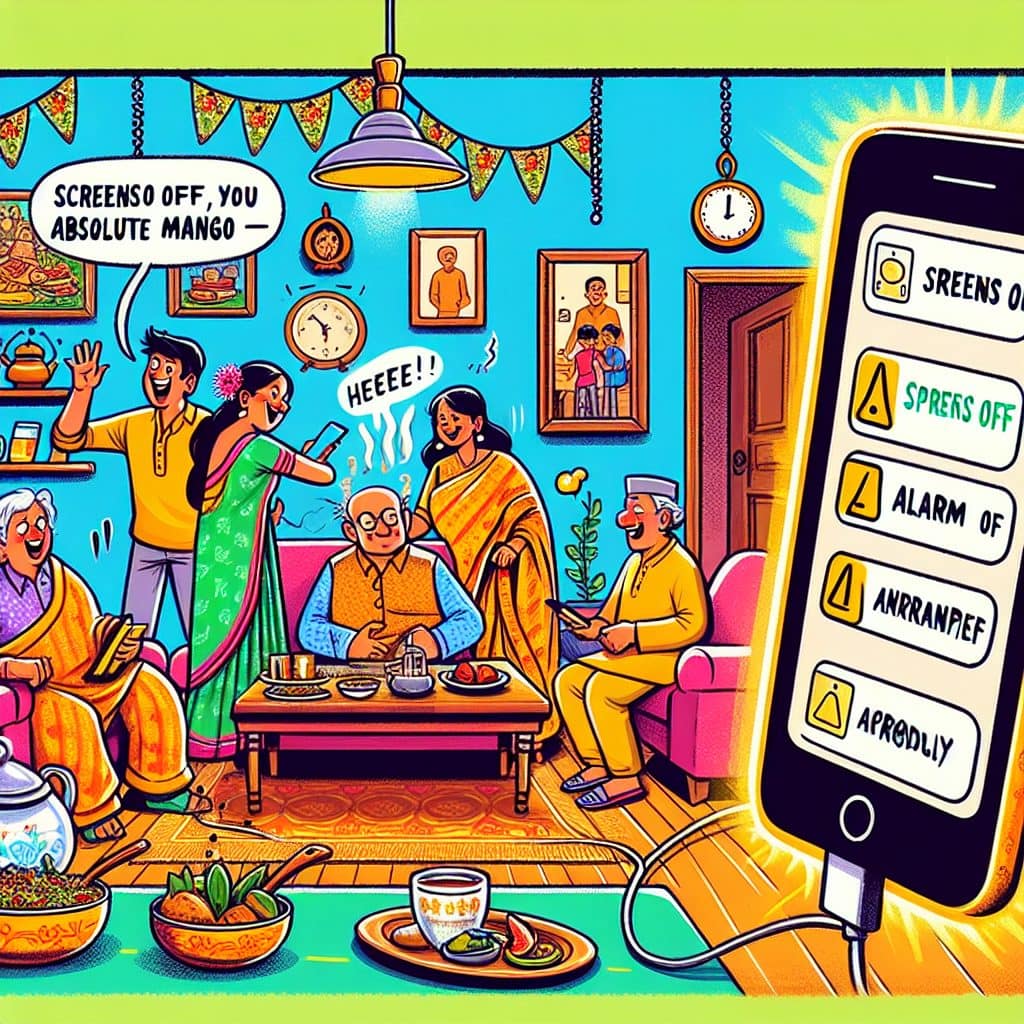
Look at your alarm time. Count backwards 8 hours. Set a SECOND alarm — on your phone, labeled “SCREENS OFF, YOU ABSOLUTE MANGO 🥭” — for that time. When it rings, put your phone on the charger outside your bedroom. Get into bed. Close your eyes.

That’s it. That’s the entire prescription. No purchase necessary. No code to enter. No “link in bio for my sleep course.” Just you, a dark room, and the radical act of doing absolutely nothing for 7-8 hours.

Your body has been waiting for this. Your railway station maintenance crew is sitting in the break room, exhausted, hoping tonight — FINALLY — you’ll let them do their job.

Let them.

Now I want to hear from you: What time did you go to bed last night — honestly? And what’s the ONE thing from this post you’re actually going to try tonight? Drop it in the comments. No judgment. Just honesty. Because the first step to fixing a sleep problem is admitting you have one — and your WhatsApp family group is definitely not going to do that for you. 😴

Why Indians Are Sleeping Like It’s a Luxury: The Health Crisis Nobody’s Talking About Read More »

The Golden Obsession: Why Every Indian Kitchen Swears By Ghee (And What Science Actually Says)

Image for Introduction - why Indians are obsessed with ghee and is it actually good for you

Introduction

Meet Sunita Sharma, 58, retired school teacher from Jaipur, who has not allowed a single meal to leave her kitchen without a generous tablespoon of ghee since approximately 1987. Her daughter-in-law, Priya, 29, fitness enthusiast and intermittent fasting devotee, watches in quiet horror every evening as Sunita drowns perfectly good dal in a golden river of clarified butter. “Beta, this is liquid gold,” Sunita says, with the confidence of someone who has never Googled a single nutrition fact in her life. “Your dadi lived to 94. You know what she ate every morning? Ghee. With everything.

Meanwhile, Priya’s WhatsApp group — “CLEAN EATING QUEENS 🥗✨” — has spent the last three weeks debating whether ghee is a superfood or a slow-acting cardiac assassination tool. One member shared an Instagram reel from a shirtless influencer who called ghee “basically poison.” Another forwarded an Ayurvedic practitioner’s post claiming ghee cures everything from joint pain to existential dread. Priya is now caught between her mother-in-law’s ancestral wisdom and a man whose primary qualification is visible abs.

And honestly? This is the most Indian dilemma that has ever existed.

Here’s the thing nobody wants to tell you: the ghee debate isn’t really about ghee. It’s about an entire wellness industry that profits from your confusion. Every time you’re torn between “ghee is sacred” and “ghee will kill you,” someone is selling you a Rs 2,400 cold-pressed alternative or a “fat-free cooking masterclass.” Because confused people buy more programs, more supplements, more “revolutionary” kitchen gadgets, and more absolute nonsense. The real enemy here isn’t the golden spoonful on your roti. It’s the machinery that keeps you terrified of your own grandmother’s cooking.

Image for What Is Ghee? - why Indians are obsessed with ghee and is it actually good for you

What Is Ghee?

Before we go to war with WhatsApp uncles and Instagram nutritionists, let’s actually understand what ghee IS — because half the people arguing about it couldn’t explain the difference between ghee and regular butter if their gym membership depended on it.

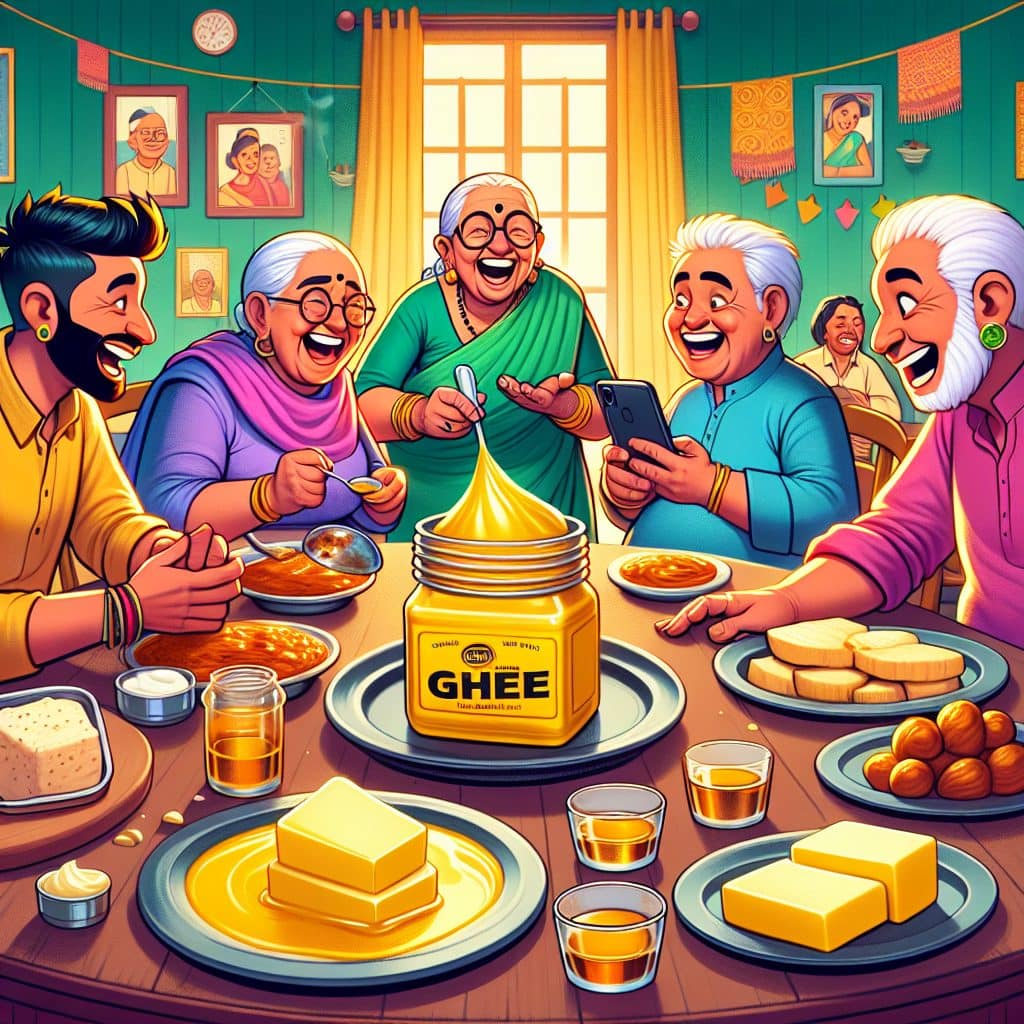
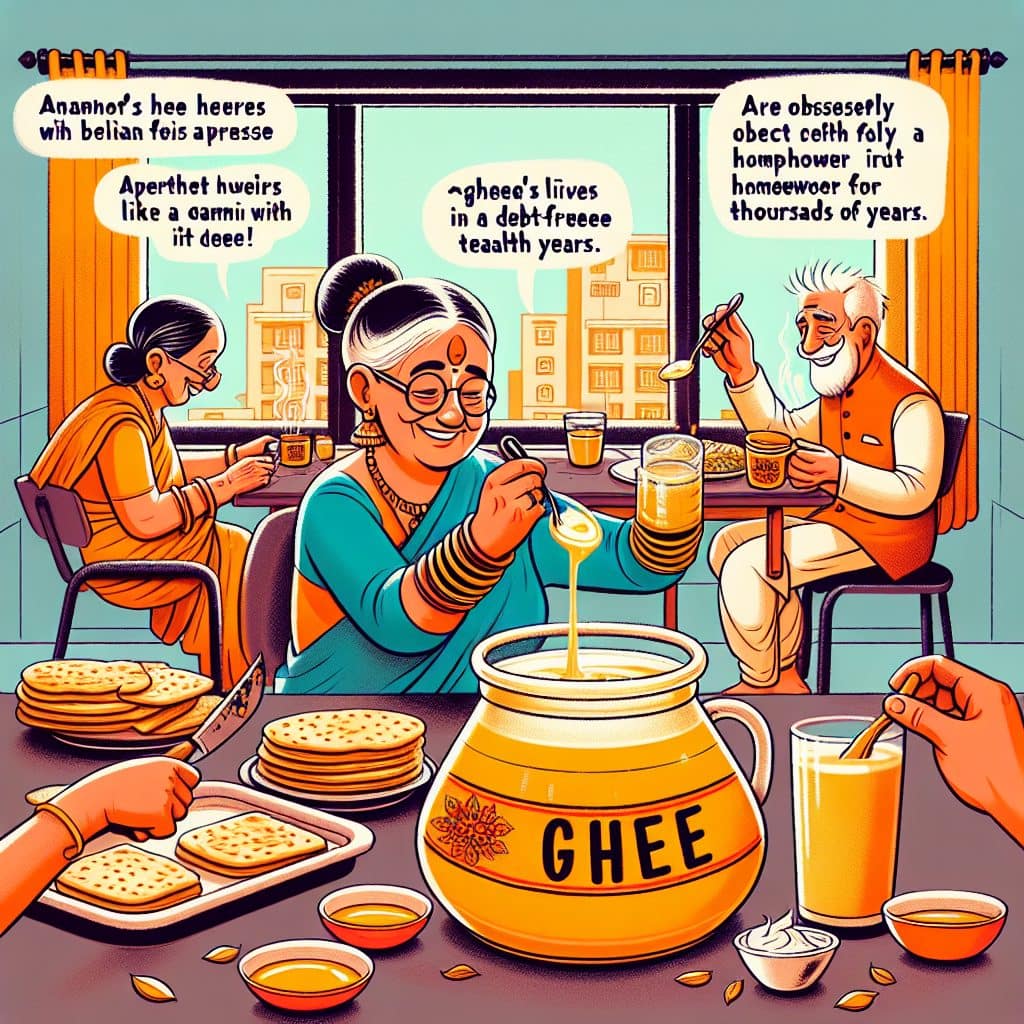
Think of ghee like this. Imagine butter is a joint family living in a 3BHK apartment. You’ve got the fat (the main earners, doing the heavy lifting), the milk solids (the relatives who showed up uninvited and never left), and water (the neighbour who keeps wandering in to borrow sugar). When you make ghee, you’re essentially evicting the water AND the uninvited relatives. You simmer butter slowly, the water evaporates, the milk solids settle to the bottom and get strained out, and what’s left is pure, golden, concentrated fat — the quiet, powerful, debt-free homeowner of the apartment.

That’s ghee. Clarified butter. No lactose. No casein. Just clean, stable, high-smoke-point fat that has been the backbone of Indian cooking for roughly 5,000 years — long before anyone invented the concept of a “macro split.”

The Nutritional Breakdown (Per Tablespoon — ~14g)

  • Calories: ~120 kcal
  • Total Fat: ~14g (roughly 62% saturated, 29% monounsaturated, 4% polyunsaturated)
  • Cholesterol: ~33mg
  • Vitamins: A, D, E, K (fat-soluble — meaning your body NEEDS fat to absorb them)
  • Butyric acid: A short-chain fatty acid that feeds your gut lining
  • Conjugated Linoleic Acid (CLA): Present in small amounts, linked to anti-inflammatory effects
  • Carbs/Protein: ZERO. None. It’s pure fat, and it has made peace with that identity.

Now look at that list again. Does it look like poison to you? Does it look like a miracle cure for 47 diseases? No. It looks like a fat. A very specific, very useful, very calorie-dense fat. And that distinction — between “good food” and “magic potion” — is where all the chaos begins.

Image for Why Should You Care? - why Indians are obsessed with ghee and is it actually good for you

Why Should You Care?

Because you’re being lied to from both sides, and it’s costing you either your health or your sanity — sometimes both.

On one side, you have the Ghee Worship Brigade — your grandmother, three WhatsApp uncles, every Ayurvedic brand with a Instagram ad budget, and that one relative who genuinely believes a spoonful of warm ghee on an empty stomach will “flush toxins” the way a pressure washer cleans a driveway. On the other side, you have the Fat-Free Fear Factory — calorie-counting apps that turn red when you add ghee, fitness influencers who cook with water (WATER, bhai), and an entire generation that has been trained to believe all saturated fat is one cheese paratha away from a heart attack.

Both sides are wrong. And the longer you ping-pong between them, the longer you stay confused, the longer you keep buying things you don’t need, and the longer your actual relationship with food stays broken.

Let’s fix that. Starting with the lies.

Image for The Ghee Myth Factory: How We Got Here - why Indians are obsessed with ghee and is it actually good for you

The Ghee Myth Factory: How We Got Here

Let’s go back to our joint family apartment analogy. Ghee — the debt-free homeowner — was living peacefully in Indian kitchens for thousands of years. Nobody questioned it. Nobody weighed it. Your nani put it on your roti, your dada drank it with warm milk, and everyone moved on with their lives.

Then, in the 1960s and 70s, a very loud American scientist named Ancel Keys basically pointed at saturated fat and screamed, “THIS IS THE MURDERER!” His research (which has since been heavily criticized for cherry-picking data from only the countries that supported his hypothesis) convinced the Western world that all saturated fat = heart disease = death. Suddenly, the entire planet decided that fat was the enemy. Refined seed oils became “heart healthy.” Margarine — a substance that is essentially one molecule away from plastic — became the hero. And ghee? Ghee got a criminal record.

India, desperate to modernize and adopt Western health standards, followed suit. Government health campaigns in the 80s and 90s actively discouraged ghee consumption. Refined vegetable oils flooded the market with “heart-friendly” labels. Dalda vanaspati — a hydrogenated, trans-fat-loaded nightmare — was marketed as the safe alternative to ghee. Let that sink in. We replaced a 5,000-year-old whole food with industrially processed trans fats and called it progress.

Now the pendulum has swung violently the other way. Ghee is being sold as a “superfood” — a word that means absolutely nothing scientifically but sells a LOT of overpriced jars on Amazon. Brands charge Rs 800-2,000 for “A2 Bilona grass-fed hand-churned moonlight-blessed ghee” as if cows are performing yoga in Rishikram before being milked. The truth, as always, is somewhere in the boring, unglamorous middle.

Uncle’s Logic vs Reality Check

Myth #1: “Ghee burns belly fat if you drink it on an empty stomach”

“Beta, one spoon of warm ghee in the morning, empty stomach — it melts the fat inside your body. Like butter on a hot tawa!”

Reality Check: Your body is not a tawa. Fat is not butter sitting on a surface waiting to be melted by more fat. That is NOT how any of this works. When you drink ghee on an empty stomach, your body digests it, breaks it into fatty acids, and either uses it for energy or stores it — exactly like any other fat. Adding fat does not subtract fat. That’s not biology, that’s not even basic maths. If drinking ghee melted belly fat, every grandmother in Punjab would have a six-pack. They don’t. Case closed.

Myth #2: “Ghee has no cholesterol because it’s pure”

“Arrey, ghee is pure desi fat. No cholesterol. Only the processed oils have cholesterol. Our ancestors never had heart problems!”

Reality Check: Ghee contains approximately 33mg of cholesterol per tablespoon. It is an animal fat. It absolutely has cholesterol. Now — here’s the nuance your uncle will never forward on WhatsApp — dietary cholesterol has a much smaller impact on blood cholesterol than we were told in the 1990s. For most healthy people, moderate ghee consumption doesn’t spike cholesterol levels dangerously. But saying it has ZERO cholesterol? That’s not ancestral wisdom, that’s just lying with extra confidence. Your ancestors also walked 15 km a day, ate one-third the calories, and didn’t sit in an AC office for 10 hours. Context matters.

Myth #3: “You can eat unlimited ghee because it’s natural”

“It’s natural, beta. Natural things can’t be bad for you. Eat as much as you want. Your body knows.”

Reality Check: Cobra venom is also natural. Arsenic occurs naturally. The sun is natural and it will absolutely give you cancer if you stand in it long enough. “Natural” is not a free pass to abandon all proportion. Ghee is ~120 calories per tablespoon. If you’re adding 3-4 tablespoons to every meal — which many Indian households absolutely do — that’s 360-480 EXTRA calories per meal from fat alone. Over a day, that could be 1,000+ calories just from ghee. Your body doesn’t care that it’s natural. It cares about energy balance. Calories don’t have a “desi exemption.”

Myth #4: “Ghee is bad for the heart — switch to refined oil”

“Doctor sahab said no ghee. Only refined sunflower oil. It says ‘heart healthy’ on the bottle!”

Reality Check: This is the myth that arguably did the most damage to Indian health. Many refined seed oils are high in omega-6 polyunsaturated fats, which when consumed in excess — and when heated repeatedly at high temperatures, as Indian cooking demands — can produce oxidized compounds and promote inflammation. Meanwhile, ghee has a smoke point of roughly 250°C (482°F), making it one of the most stable cooking fats available. It doesn’t break down into harmful compounds when you’re making tadka at high heat. The refined oil on your shelf, with its cheerful heart logo, often can’t say the same. This doesn’t mean ghee is harmless in unlimited quantities. It means the replacement was often worse than the original.

Image for The Science Nobody Tells You (Because It Doesn't Sell Programs) - why Indians are obsessed with ghee and is it actually good for you

The Science Nobody Tells You (Because It Doesn’t Sell Programs)

Let’s strip away the mythology, the marketing, and the WhatsApp forwards and look at what ghee actually does inside your body.

What ghee DOES:

  • Provides butyric acid — a short-chain fatty acid that nourishes the cells lining your colon, supports gut barrier integrity, and has demonstrated anti-inflammatory properties in multiple studies. Your gut bacteria also produce butyrate when you eat fiber, but ghee gives you a direct dietary source.
  • Delivers fat-soluble vitamins (A, D, E, K) — and because it IS fat, it actually helps your body absorb these vitamins from other foods in the same meal. That dal-chawal with a teaspoon of ghee? Your body absorbs more nutrients from it than the same dal without fat. That’s not magic. That’s biochemistry.
  • Provides a stable cooking medium — high smoke point means fewer toxic aldehydes and oxidation byproducts compared to many vegetable oils when used for Indian-style high-heat cooking (tadka, frying, roasting).
  • Contains CLA (Conjugated Linoleic Acid) — especially in ghee from grass-fed cows. CLA has shown modest anti-inflammatory and body composition benefits in some studies, though the amounts in ghee are small.
  • Is virtually lactose and casein-free — making it tolerable for many people with dairy sensitivities (though not all — severe allergies still warrant caution).

What ghee does NOT do:

  • Does NOT “detoxify” your body. Your liver and kidneys handle detoxification. Ghee is not a cleaning service.
  • Does NOT “boost metabolism” in any meaningful way. No single food does. This claim is the nutritional equivalent of saying one match can heat a building.
  • Does NOT cure joint pain, arthritis, or inflammation on its own. It may have mild anti-inflammatory properties. Mild. It’s not ibuprofen.
  • Does NOT cancel out an otherwise terrible diet. Adding ghee to Maggi, white bread, and three cups of chai with sugar doesn’t create a “balanced meal.” It creates an expensive calorie bomb.
  • Does NOT make you immune to heart disease just because your grandmother survived on it. Survivorship bias is real. You remember dadi who lived to 94. You don’t remember the ones who didn’t.

Remember Sunita Sharma, our ghee-generous retired teacher? She walks 4 km every morning at the park, eats home-cooked meals, rarely snacks, and her total daily calorie intake — even with the ghee — hovers around a reasonable 1,600-1,800 calories. Her ghee consumption works FOR her because the rest of her lifestyle supports it. Now look at her son, Vikram, 33, Pune-based IT professional, who adds ghee to every meal but ALSO orders Swiggy twice a day, drinks three sugary coffees, and walks approximately 1,200 steps total. Same ghee. Completely different outcome. The spoon didn’t change. The lifestyle did.

Image for Ghee and Your Body: The Uncomfortable Truth - why Indians are obsessed with ghee and is it actually good for you

Ghee and Your Body: The Uncomfortable Truth

What Ayurveda ACTUALLY Said

Ayurvedic texts — specifically Charaka Samhita and Sushruta Samhita — recommended ghee as part of a balanced, personalized dietary framework. The dosage was specific. It was adjusted by body type (prakriti), season (ritu), digestive capacity (agni), and activity level. Ghee was considered “sattvic” — calming and nourishing — but it was NEVER prescribed as “eat unlimited amounts with everything.” Ayurveda explicitly warned against excess fat consumption for people with weak digestion or sedentary lifestyles. Explicitly.

What Your WhatsApp Group THINKS It Said

“Ghee is divine. More ghee = more health. Our ancestors ate ghee by the kilo and lived to 150. Science is Western propaganda. Share this message with 10 people for good health. 🙏🕉️🐄”

Common Ground

Both Ayurveda and modern nutritional science agree on this: ghee is a high-quality fat that has a legitimate place in the human diet, in appropriate quantities, adjusted for individual needs. Neither system — when properly understood — tells you to drown your food in it. Neither tells you to eliminate it entirely. The boring answer is the correct one: moderate, mindful, and matched to your actual lifestyle.

Let’s look at a real conversation from Priya’s WhatsApp group:

Neha: “Guys I read that A2 ghee has completely different properties than regular ghee. Like it goes to your cells differently??”

Meghna: “Haan yaar, A2 is from desi cows. The protein is different. It’s basically medicine.”

Priya: “But ghee doesn’t even have protein? The milk solids are removed?”

Neha: “…”

Meghna: “…”

Sunita (who was silently added to the group by her son): “Just eat the ghee, beta. 🙏”

Here’s the truth about A2 vs A1 ghee: the A1/A2 distinction refers to the type of beta-casein protein in milk. Since ghee is clarified butter with milk solids REMOVED, the A1/A2 difference becomes largely irrelevant in the final product. The fatty acid profile may differ very slightly based on the cow’s breed and diet (grass-fed vs grain-fed matters more), but paying three times the price specifically for “A2 ghee” is mostly paying for marketing, not biochemistry. Obviously.

Image for The Simple Fix - why Indians are obsessed with ghee and is it actually good for you

The Simple Fix

Alright, enough destruction. Let’s build something. Here’s how to actually use ghee like a rational human being who respects both science and their grandmother.

Step 1: Know Your Number

Total fat intake for most adults should be roughly 20-35% of total daily calories. For someone eating 2,000 calories/day, that’s 44-78 grams of fat. Ghee should be ONE source of fat in your diet — not the ONLY source. A reasonable daily ghee intake for most moderately active Indian adults: 1-3 teaspoons (5-15g), distributed across meals.

Step 2: Use It Where It Matters Most

  • For tadka/tempering: YES. This is where ghee shines — high smoke point, stable, adds flavour. Use 1 teaspoon per tadka.
  • On roti/rice: YES, but measure it. One teaspoon on your roti, not a ladle. Your roti is not a swimming pool.
  • For deep frying: Technically excellent due to stability, but deep frying in ghee regularly is a calorie apocalypse. Save it for festivals, not Tuesdays.
  • In morning coffee/bulletproof style: If you enjoy it and account for the calories, fine. But it’s not a “metabolism hack.” It’s coffee with fat. That’s all.

Step 3: The Weekly Ghee Budget (A Real Framework)

Think of your weekly fat intake like a household budget. Ghee gets an allocation — not the entire salary.

  • Monday-Friday (workdays, lower activity): 1-2 teaspoons/day — in cooking, on dal or roti
  • Saturday-Sunday (more active, social meals): 2-3 teaspoons/day — can be slightly more generous with weekend meals
  • Total weekly ghee budget: ~70-100g (roughly half a standard 200g jar per week)
  • Balance with: Nuts, seeds, fish (if non-vegetarian), small amounts of cold-pressed mustard or coconut oil for variety

Step 4: Stop Compensating for Bad Habits with Ghee

Adding ghee to your diet does not fix:

  • A lack of vegetables (most Indian diets are severely low in vegetables — yes, really)
  • Excessive refined carbs (that third roti with extra ghee is still three rotis)
  • Zero physical activity (ghee doesn’t exercise for you, you beautiful disaster)
  • Chronic sleep deprivation (no amount of warm ghee milk fixes 5 hours of sleep)
Image for Common Mistakes - why Indians are obsessed with ghee and is it actually good for you

Common Mistakes

Mistake #1: Treating ghee as a health supplement instead of a cooking fat. Ghee is food. It’s a very good cooking fat. It is NOT medicine. Stop taking it like a pill on an empty stomach expecting miracles. You’re just eating fat before breakfast. Congratulations.

Mistake #2: Eliminating ghee entirely because “saturated fat is bad.” The blanket demonization of saturated fat has been significantly challenged by research over the last two decades. Moderate saturated fat intake — within a balanced diet that includes fiber, vegetables, protein, and physical activity — has not been conclusively shown to increase heart disease risk in otherwise healthy individuals. Removing ghee and replacing it with refined seed oils heated to smoking point is arguably worse.

Mistake #3: Using ghee quantity as a measure of love or tradition. “Mere ghar mein toh ghee ki nadi bahti hai” is not a nutritional strategy. It’s a flex. Your love for your family can be expressed in portion-controlled amounts. Nobody’s affection is measured in tablespoons.

Mistake #4: Falling for premium branding without understanding what you’re paying for. Most of the Rs 1,500 “artisanal grass-fed A2 bilona method” ghee provides a nearly identical fatty acid profile to decent quality regular cow ghee that costs Rs 500-600 per kg. The difference is packaging, storytelling, and an Instagram aesthetic. If you can afford the premium and prefer the taste, go ahead. But don’t believe you’re buying fundamentally different nutrition. You’re buying a narrative.

Mistake #5: Ignoring individual health conditions. If you have diagnosed hyperlipidemia, familial hypercholesterolemia, existing cardiovascular disease, or your doctor has specifically asked you to limit saturated fat — LISTEN TO YOUR DOCTOR. Not your mother-in-law. Not this blog. Not a WhatsApp forward. Individual medical conditions override general dietary advice. Always.

Image for Quick Summary - why Indians are obsessed with ghee and is it actually good for you

Quick Summary

For those of you who scrolled past 2,000 words to get here — I see you, I respect the hustle, and here’s your cheat sheet:

  • Ghee is a high-quality cooking fat — not a superfood, not a poison, not medicine.
  • 1-3 teaspoons per day is a reasonable amount for most moderately active adults. Adjust based on your total calorie needs and activity level.
  • It provides butyric acid, fat-soluble vitamins, and a stable cooking medium — these are real, science-backed benefits.
  • It does NOT burn fat, detoxify your body, cure diseases, or cancel out an unhealthy diet.
  • The A2/premium ghee market is mostly marketing. Good quality regular cow ghee does the job perfectly.
  • Your grandmother’s ghee habit worked because her ENTIRE lifestyle was different — more movement, less processed food, smaller portions, less stress-eating at midnight.
  • Context is everything. Ghee on a roti after a 5 km walk ≠ ghee on a paratha before sitting in a chair for 9 hours.
  • If you have a specific medical condition, follow your doctor’s advice — not ancestral wisdom, not Instagram, not this article.
Image for FAQ: Questions Your WhatsApp Group Is Too Embarrassed to Ask - why Indians are obsessed with ghee and is it actually good for you

FAQ: Questions Your WhatsApp Group Is Too Embarrassed to Ask

Q: Can I eat ghee every day if I’m trying to lose weight?

Yes — IF you account for the calories. Ghee is calorie-dense (~120 kcal per tablespoon), so it needs to fit within your daily calorie target, not sit on top of it. One teaspoon on your dal or roti is roughly 45 calories — completely manageable. Four tablespoons drizzled over everything because “it’s healthy fat” is 480 extra calories — and that’s how weight loss stalls. Track it. Don’t fear it. Don’t ignore it. Fat doesn’t make you fat. Excess calories make you fat. Ghee just makes it very easy to accidentally eat excess calories because it’s delicious and your hand is generous.

Q: Is ghee better than butter?

For cooking, yes — ghee has a higher smoke point (~250°C vs butter’s ~175°C), is more shelf-stable, and doesn’t burn as easily during Indian high-heat preparations. For nutrition, they’re extremely similar — both are dairy fats with comparable calorie and fatty acid profiles. Ghee has the advantage of being virtually lactose and casein-free, so it’s better tolerated by people with mild dairy sensitivities. If you’re spreading something on toast at room temperature, butter is fine. If you’re making tadka, ghee wins. It’s not a moral choice. It’s a practical one.

Q: My doctor said to avoid ghee because of high cholesterol. But my family says ghee REDUCES cholesterol. Who’s right?

Your doctor. Full stop. While it’s true that the relationship between dietary saturated fat and blood cholesterol is more nuanced than we once believed, if you have diagnosed dyslipidemia or cardiovascular risk factors, your doctor’s personalized advice trumps every general wellness claim — including the ones in this article. Ghee does not reduce cholesterol. Some studies suggest moderate ghee intake doesn’t significantly RAISE it in healthy individuals, which is very different from saying it lowers it. Your family means well. Your doctor has your blood work. Go with the blood work.

Image for Final Thoughts - why Indians are obsessed with ghee and is it actually good for you

Final Thoughts

Here’s what I want you to take away from this, and I want you to really let it sink in:

Ghee is not your enemy. Ghee is not your savior. Ghee is a fat. A really good, versatile, time-tested fat that deserves a measured, respected place in your kitchen — not a shrine and not a criminal record.

The Indian obsession with ghee is beautiful in its cultural roots and absolutely unhinged in its modern execution. We went from our grandmothers using it wisely within naturally balanced, physically active lifestyles to either worshipping it as liquid divinity or fearing it as liquid death — with no middle ground and no critical thinking in between.

Your body doesn’t care about tradition. It doesn’t care about Instagram. It doesn’t care about what your uncle forwarded at 6:14 AM with fourteen prayer emojis. It cares about how much you eat, how much you move, how well you sleep, and whether your overall dietary pattern makes sense. Ghee fits beautifully into a sensible pattern. It doesn’t replace one.

  • Use 1-3 teaspoons daily. Measured. Intentional. Delicious.
  • Stop treating food as either villain or hero. It’s just food. Eat it with respect and awareness.
  • Your grandmother was right about ghee being good. She was also walking 8 km a day and eating 1,500 calories. Copy the whole lifestyle, not just the ghee part, you absolute mango.

Now tell me — what’s the most insane ghee claim you’ve heard from a family member? Drop it in the comments. I need to know what we’re dealing with here. 👇

The Golden Obsession: Why Every Indian Kitchen Swears By Ghee (And What Science Actually Says) Read More »