
Why Indians Are Sleeping Like It’s a Luxury: The Health Crisis Nobody’s Talking About
Introduction
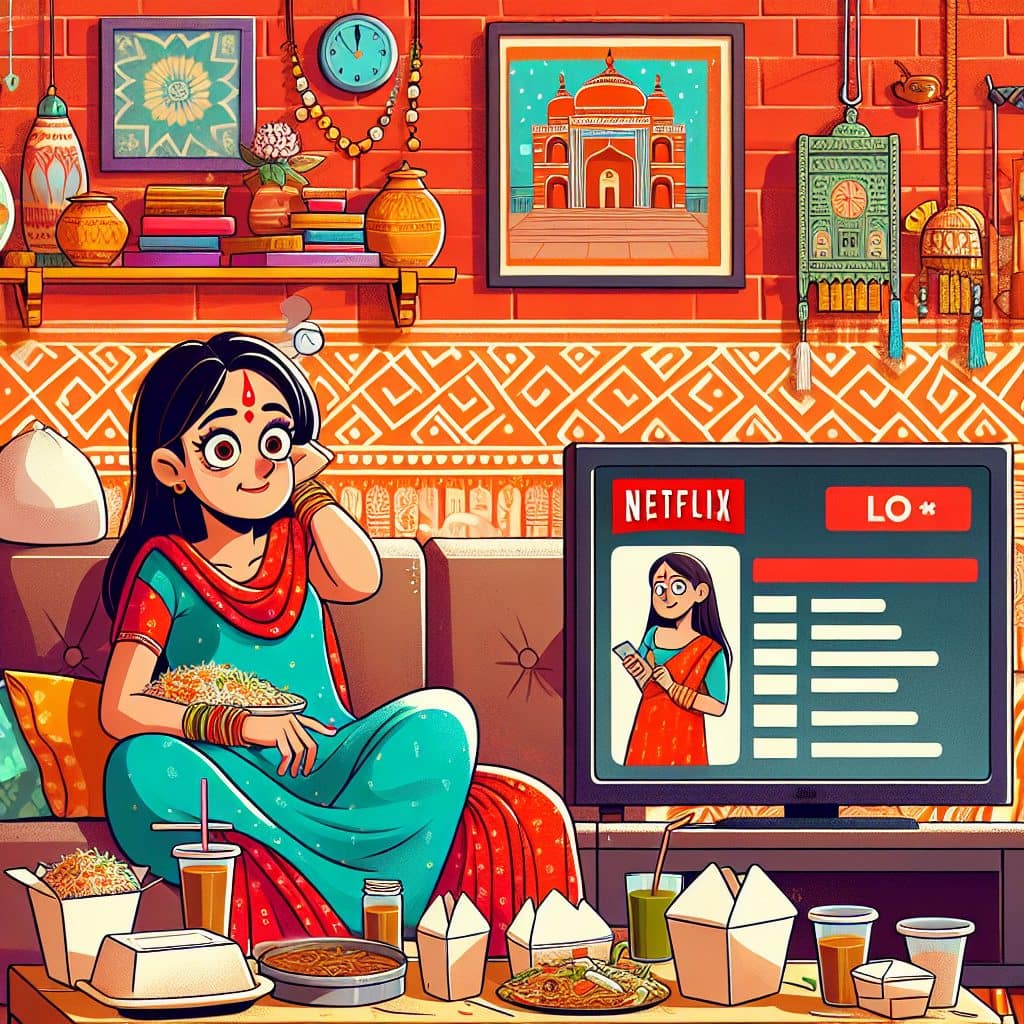
Meet Sunita Sharma, 38, HR manager from Noida, mother of two, proud owner of a Netflix watchlist longer than her grocery list, and a woman who hasn’t slept before 1:30 AM since approximately 2017.
Her mornings begin at 6:15 AM — not because she’s a “morning person,” but because Aarav needs to be at school by 7:30, the tiffin won’t pack itself, and her husband Vikram is absolutely, cosmically incapable of finding his own socks. By 9 AM, she’s on her third cup of chai, answering Slack messages from her boss who apparently believes “flexible work hours” means “available at all hours.” By 11 PM, after the kids are asleep, the kitchen is cleaned, and tomorrow’s outfits are sorted, Sunita finally — finally — gets her “me time.” Which is really just doom-scrolling Instagram Reels about meal prep she’ll never do, while her left eye twitches from exhaustion.
Sunita sleeps five hours and forty minutes on a good night. She calls this “managing well.” Her body calls this something very different.
And here’s the thing — Sunita isn’t an outlier. She IS India. A 2023 Fitbit study found that Indians are among the most sleep-deprived people on the planet, averaging just 6 hours and 55 minutes of sleep — and that’s the generous estimate that includes weekends when some of us manage to pass out for eight hours after a biryani coma. The weekday reality? Closer to six hours. Sometimes five. Sometimes that ungodly zone where you’re not sure if you slept or just blinked very slowly for four hours.
But who’s telling you this is a crisis? NOBODY. Because there’s no supplement for sleep that costs ₹2,999 a month. There’s no influencer doing “sleep transformations” with before-and-after photos. There’s no gym selling a “Premium Sleep Membership.” The wellness industry doesn’t make money when you simply close your eyes and do nothing — so they’d rather sell you ashwagandha gummies, blue-light glasses, and a ₹45,000 mattress than tell you the uncomfortable truth: you are slowly, methodically destroying your body six hours at a time, and the fix costs exactly zero rupees.

What Is Sleep Deprivation?
Let’s get something straight before your WhatsApp uncle forwards you an article about how Narendra Modi sleeps four hours and “look at his energy, beta” — sleep deprivation isn’t just about feeling tired. It’s a full-system biological meltdown that you’ve been normalizing since college.
Think of your body as a massive Indian railway station. Not a cute little suburban stop — we’re talking New Delhi Railway Station, the whole chaos. During the day, thousands of trains (your metabolic processes, immune responses, hormonal cycles, neural pathways) are running at full capacity. Platforms are packed. Signals are firing. The announcements are constant and slightly incomprehensible.
Now, sleep is the NIGHT SHIFT. It’s when the maintenance crew comes in. They repair the tracks. They clean the platforms. They update the signal systems. They clear the debris from the day. They reset the entire network so tomorrow’s 5:45 AM Shatabdi can leave on time.
When you sleep five hours instead of seven or eight, you’re telling that maintenance crew: “You have half the time. Fix everything. Good luck.”
Guess what happens? The tracks start cracking. The signals misfire. Trains start running late, then running into each other. And one day, Platform 3 just… collapses. That’s your immune system failing at 35. That’s your blood sugar going haywire at 40. That’s your memory turning into a sieve at 45.
Sleep deprivation isn’t a badge of honor. It’s deferred maintenance on the most complex system you’ll ever operate — and the bill ALWAYS comes due.
The Two Types of Sleep You’re Probably Messing Up
Your sleep isn’t one long unconscious blob. It cycles through stages, and two matter enormously:
- Deep Sleep (Slow-Wave Sleep): This is physical repair mode. Muscle recovery, tissue growth, immune system strengthening, growth hormone release. This happens mostly in the first half of the night. Cut your sleep short at the front end — say, by going to bed at 2 AM — and you slash this phase.
- REM Sleep (Rapid Eye Movement): This is brain repair mode. Memory consolidation, emotional processing, creative problem-solving. This happens mostly in the last 90-minute cycles — the ones you destroy every morning when your alarm goes off at 6:15 AM and you hit snooze four times.
So when Sunita sleeps from 1:30 AM to 6:15 AM, she’s getting butchered deep sleep AND butchered REM sleep. She’s essentially getting the nutritional equivalent of eating only the bread from a sandwich and throwing away everything inside. Technically she ate. Practically she got almost nothing.
Why Should You Care?
Because, beta, this isn’t about “feeling fresh.” Sleep deprivation is currently doing things to Indian bodies that would make a horror movie director uncomfortable. And almost nobody is connecting the dots.
India’s Health Crisis Has a Sleep-Shaped Hole
Consider these numbers and try not to spit out your chai:
- India is the diabetes capital of the world — over 101 million diagnosed cases. Sleep deprivation increases insulin resistance by up to 30% after just FOUR nights of poor sleep. But sure, let’s keep blaming sugar alone.
- Heart disease kills more Indians than any other cause. Sleeping less than six hours increases cardiovascular risk by 20-48%. But haan, let’s focus only on cholesterol panels.
- India has one of the highest rates of depression and anxiety globally, with a massive treatment gap. Chronic sleep deprivation literally shrinks the prefrontal cortex and amplifies the amygdala — meaning you become WORSE at rational thinking and BETTER at panicking. Congratulations.
- Obesity rates in urban India have doubled in 20 years. Sleep-deprived people eat an average of 385 extra calories per day. That’s roughly one extra paratha with butter every single day — which, over a year, adds up to approximately 18 kg of potential weight gain. But nobody blames the 1:30 AM bedtime. They blame the paratha.
The paratha isn’t the problem, yaar. YOUR SCHEDULE is the problem.
The WhatsApp Group Diagnosis
Meanwhile, in “SHARMA FAMILY (MAIN) 🏠🙏”:
Vikram Chacha: “Forwarded as received — sleeping too much causes laziness and weight gain. Early to bed, early to rise. Our ancestors woke at 4 AM for Brahma Muhurta 🙏”
Sunita’s Mom: “Haan beta, your nani never slept more than 5 hours. She was fine till 89.”
Random Cousin Rahul: “Bro I sleep 4 hours and gym at 5 AM. Grind never stops 💪🔥”
Let’s unpack this beautiful disaster, shall we?
Nani also didn’t sit under artificial blue light for four hours before bed. Nani didn’t have a cortisol-spiking corporate job. Nani walked 6 km a day and ate seasonal food and lived in a world where “notification” meant someone was yelling from the neighbor’s balcony. Nani’s five hours were almost certainly more than your seven hours in terms of actual sleep quality. And also — with deepest respect — survivorship bias is not a health strategy. For every nani who lived to 89, there were others who didn’t, and nobody forwards those stories in the family group.
And Rahul? Bhai, your “grind” is just cortisol addiction wearing a motivational t-shirt. Sit down.

The Simple Fix
Arrey, don’t scroll away thinking “accha, so I need to buy a sleep tracker and do some meditation app thing.” No. The fix is not a purchase. The fix is a rearrangement. Let’s go back to our railway station analogy — you don’t need to build a new station. You need to give the maintenance crew their full shift back.
Uncle’s Logic vs Reality Check
Myth #1: “I function fine on 5-6 hours. I’m just built different.”
Uncle’s Logic: “Beta, sleep is for the weak. I’ve slept 5 hours since 1987 and look at me — perfectly fine.”
Reality Check: You are not “fine.” You have simply forgotten what “fine” feels like. Research from the University of Pennsylvania showed that people sleeping six hours a night for two weeks performed as poorly on cognitive tests as people who hadn’t slept for 48 hours straight — BUT THEY DIDN’T REALIZE IT. Your brain literally loses the ability to assess its own impairment. You’re not built different. You’re impaired and confident about it. That’s not a superpower, uncle. That’s drunk driving without the alcohol.
You’ve normalized your own decline. That’s not adaptation — that’s denial.
Myth #2: “I’ll catch up on weekends.”
Uncle’s Logic: “Arre, Saturday-Sunday mein cover kar lenge. Sleep debt is like EMI — you can pay it later.”
Reality Check: Sleep debt does NOT work like a bank loan, you absolute mango. A 2019 study in Current Biology found that “recovery sleep” on weekends failed to reverse the metabolic damage caused by weeknight sleep deprivation. In fact, people who did the sleep-binge-on-weekends pattern had WORSE insulin sensitivity than people who were consistently sleep-deprived. Your body doesn’t have a weekend mode. Your pancreas doesn’t know it’s Saturday. You cannot make a weekly installment on biological damage that compounds daily.
Sleep debt isn’t an EMI. It’s more like a credit card at 42% interest that doesn’t accept late payments.
Myth #3: “Chai/coffee fixes everything.”
Uncle’s Logic: “Ek cutting chai and I’m fresh as morning. Who needs 8 hours when you have Brooke Bond Red Label?”
Reality Check: Caffeine doesn’t give you energy. It blocks adenosine — the chemical that tells your brain you’re tired. The tiredness is STILL THERE, piling up behind the caffeine dam like water behind a wall. When the caffeine wears off — crash. So you drink more. The cycle continues. Meanwhile, caffeine consumed even 6 hours before bedtime reduces deep sleep by 20%. So your “4 PM chai to get through the evening” is actively sabotaging tonight’s sleep, which makes you need MORE chai tomorrow. You haven’t solved the problem. You’ve created a subscription to it.
Chai is masking your exhaustion, not fixing it. That’s not a solution. That’s concealer for your brain.
Myth #4: “Our ancestors slept less and were healthier.”
Uncle’s Logic: “Pehle log 4 baje uthte the, khet mein kaam karte the, kabhi beemar nahi hote the. Aaj kal ki generation soft hai.”
Reality Check: Your ancestors also went to bed when it got dark — around 7-8 PM — because they didn’t have Netflix, LED lights, or a WhatsApp group pinging at 11:45 PM with “Good Night” messages featuring roses and the Eiffel Tower. If dada ji woke at 4 AM and slept at 8 PM, that’s EIGHT HOURS, uncle. He wasn’t sleeping less. He was sleeping EARLIER. Massive difference. Also, he was physically exhausted from actual labor, which promotes deeper sleep quality. You’re mentally exhausted from replying to emails, which promotes shallow, anxious, garbage sleep. Not the same game. Not even the same sport.
Your ancestors weren’t tougher sleepers. They just didn’t have screens destroying their circadian rhythm.
The Science Nobody Tells You (Because It Doesn’t Sell Programs)
Here’s what happens inside your body when you consistently sleep less than seven hours. Not occasionally. Not during exam week. CONSISTENTLY — like the way most urban Indians have been doing for years.
What sleep deprivation DOES to your body:
- Spikes cortisol levels — your stress hormone stays elevated, keeping you in a low-grade fight-or-flight mode. This directly increases belly fat storage. That stubborn tummy Sunita blames on “post-pregnancy metabolism”? A good chunk of it is cortisol from five years of 5-hour nights.
- Destroys insulin sensitivity — after just 4 nights of sleeping 4.5 hours, healthy young adults showed insulin resistance comparable to pre-diabetics. FOUR NIGHTS. Not four years. Four nights.
- Tanks your immune system — sleeping less than 6 hours makes you 4.2 times more likely to catch a cold when exposed to the virus. That “weak immunity” you keep complaining about at every season change? Maybe it’s not the weather, yaar. Maybe it’s the 1 AM bedtime.
- Increases ghrelin, decreases leptin — ghrelin says “eat more,” leptin says “you’re full.” Sleep deprivation cranks up the hunger hormone and mutes the satiety hormone. You’re not weak-willed for craving samosas at 4 PM. Your hormones are SCREAMING for quick energy because your brain is running on fumes.
- Impairs glymphatic clearance — during deep sleep, your brain literally washes itself, clearing out beta-amyloid plaques and metabolic waste. These plaques are associated with Alzheimer’s disease. Chronically poor sleep = decades of your brain sitting in its own waste. Pleasant image? Good. Remember it at midnight when you’re about to start another episode.
What sleep deprivation does NOT do:
- Make you tougher, more productive, or more successful
- Get compensated by supplements, adaptogens, or ₹3,000 ashwagandha gummies
- Get fixed by sleeping 12 hours on Sunday (that’s called circadian disruption, and it makes Monday WORSE)
- Show up on a blood test until the damage is already significant
Sunita, by the way, went to her doctor last month because she’s been gaining weight despite “eating clean” and walking 6,000 steps a day. Her fasting insulin was elevated. Her HbA1c was creeping up. The doctor said “watch your diet.” Nobody — NOBODY — asked her what time she goes to bed. Because in Indian medicine, sleep is still treated as a lifestyle preference, not a biological necessity. That’s not how any of this works.
Sleep and Your Body: The Uncomfortable Truth
Here’s what nobody in the Indian wellness space wants to admit: sleep is the single highest-leverage health intervention available to most Indians, and it’s being systematically ignored because it can’t be monetized.
Think about it. Every other health variable gets attention:
- Diet? Billion-dollar industry. Keto plans, intermittent fasting apps, protein powders, meal delivery services.
- Exercise? Cult.fit, gym chains, yoga studios, home equipment, personal trainers.
- Supplements? Don’t even get me started. The Indian supplement market is worth over ₹40,000 crore and growing.
- Sleep? “Just sleep more, bro.” That’s the entire offering. Because what are you going to sell? Darkness? Silence? Doing nothing?
What Ayurveda ACTUALLY said: Sleep (Nidra) is one of the three pillars of life (Trayopastambha), alongside food (Ahara) and celibacy/energy management (Brahmacharya). Charaka Samhita explicitly states that proper sleep is the foundation of happiness, nourishment, strength, virility, knowledge, and life itself. Not a luxury. A PILLAR.
What your WhatsApp group THINKS it said: “Wake up at 4 AM for Brahma Muhurta and drink warm water. That’s the ancient secret.” — forwarded with 17 lotus emojis and zero mention of when to actually GO TO SLEEP.
Common ground: Both Ayurveda and modern sleep science agree — sleep timing matters, sleep consistency matters, and sleep is non-negotiable for health. Ayurveda said it 3,000 years ago. Science proved it with polysomnography. Your WhatsApp group ignored both.
The uncomfortable truth for most urban Indians is this: you are not sleeping poorly because of a medical condition. You are sleeping poorly because of choices that feel like obligations — the late-night TV, the scroll session, the “one more episode,” the work email at 11 PM that you could answer at 8 AM, the belief that “me time” can only happen after midnight because the rest of your day belongs to everyone else.
Sunita doesn’t have insomnia. Sunita has a boundary problem disguised as a sleep problem. And so do most of us.
Common Mistakes
Even when Indians TRY to fix their sleep, they make it worse. Here’s the hall of shame:
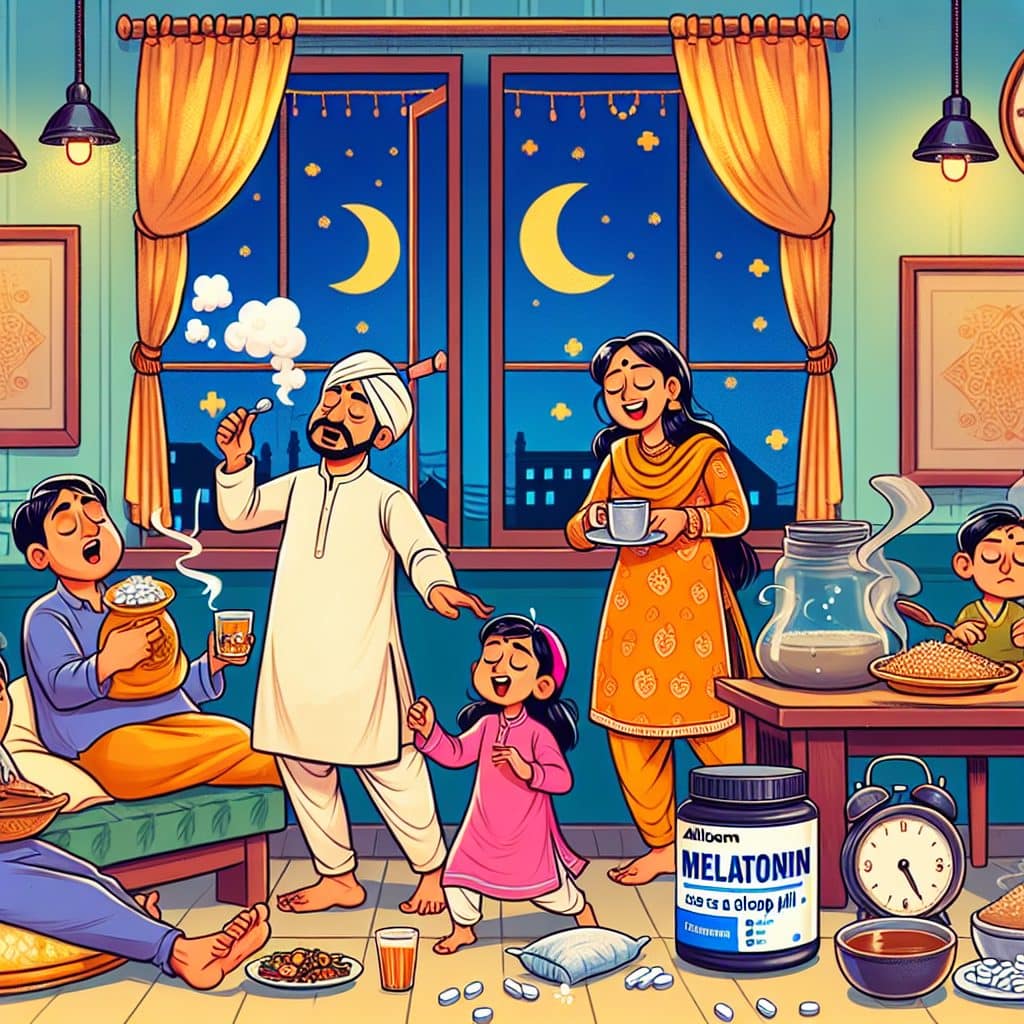
Mistake #1: The “Melatonin Will Save Me” Delusion
Melatonin is not a sleeping pill. It’s a timing signal. Taking 10 mg of melatonin because your friend on Instagram said so is like blasting an air horn to tell your body it’s nighttime. Your body naturally makes 0.1-0.3 mg. You’re taking 30-100x that amount. Short-term? Maybe helps with jet lag. Long-term, high-dose, unsupervised? You’re messing with your endocrine system for no good reason. Put the gummies down.
Mistake #2: Exercising at 10 PM Because “At Least I’m Moving”
Vigorous exercise raises core body temperature and cortisol for 2-3 hours. Your body needs to COOL DOWN to initiate sleep. That 10 PM HIIT workout on YouTube is basically telling your nervous system “WAKE UP AND FIGHT A TIGER” right before you want it to power down. Move your workout to morning or late afternoon. If evening is your only option, keep it to walking or gentle yoga — not burpees that make you question your life choices.
Mistake #3: The Revenge Bedtime Procrastination Trap
This is Sunita’s exact disease and it has a clinical name now — revenge bedtime procrastination. When you feel you had no control over your day, you “reclaim” time by staying up late, even though you’re doing nothing productive. You’re not reclaiming anything. You’re borrowing tomorrow’s energy to scroll through today’s reels. That’s not empowerment. That’s a payday loan on your health.
Mistake #4: Keeping the AC at 16°C or Sleeping Without It in 38°C
Ideal sleep temperature is 18-20°C. Most Indians either freeze themselves into an ice cube at 16°C (which fragments sleep because your body fights hypothermia) or sleep in a sweaty room at 32°C (which prevents the core body temperature drop needed for deep sleep). Set it to 24°C with a fan. Stop making your bedroom either the Arctic or the Thar Desert.
Mistake #5: Using the Bedroom as an Office/Theater/Restaurant
If you eat, work, watch TV, argue with your spouse, and scroll social media in bed — your brain no longer associates the bed with sleep. It associates it with STIMULATION. Your bed should involve exactly two activities, and one of them is sleeping. The other one also helps you sleep better, so, you know — prioritize both.

Battle Strategies: Real-World Implementation for Actual Humans
Alright, enough destruction. Let’s build. Here’s a realistic sleep improvement plan for actual Indians with actual lives — not monks in a Himalayan cave with zero responsibilities.
The Non-Negotiable Foundation (Week 1-2)
- Pick a fixed wake-up time and STICK TO IT — including weekends. Yes, Saturdays too. Your circadian rhythm doesn’t have a “weekend mode.” If you need to wake at 6:30 AM on weekdays, wake at 7:00 AM on weekends. Not 11. Not “whenever I wake up naturally.” 7:00 AM. This single change anchors your entire sleep cycle.
- Count backwards 8 hours from your wake time. That’s your “screens off” time. Wake at 6:30? Screens off at 10:30 PM. In bed by 10:45. This isn’t optional. This is the new boundary.
- No caffeine after 2 PM. Not 4 PM. Not “just one small cup.” 2 PM is your caffeine curfew. Non-negotiable. Switch to decaf or herbal if you need the ritual.
The Optimization Layer (Week 3-4)
- Morning sunlight within 30 minutes of waking — 10-15 minutes. Step onto your balcony. Walk to the chai stall. Stand in the park. This resets your circadian clock more powerfully than any supplement. Sunlight triggers cortisol in the morning (good) and programs melatonin release 14-16 hours later (also good).
- Create a 30-minute wind-down ritual. Not a “routine” involving 14 steps and a gratitude journal and rose-quartz meditation. Just: dim the lights, put the phone in another room (yes, ANOTHER ROOM), do something boring. Read a physical book. Talk to your spouse about something that isn’t logistics. Fold laundry. The point is LOW STIMULATION.
- Dinner by 8 PM, nothing heavy after. Your digestive system working overtime at midnight pulls blood away from the processes that help you sleep. A light dinner, finished 2-3 hours before bed, is genuinely one of the easiest wins available.
Sunita’s New Schedule (Realistic Version)
Here’s what Sunita’s weeknight looks like after implementing this for three weeks:
- 6:30 AM: Wake up. 10 minutes balcony sunlight while chai brews.
- 2:00 PM: Last cup of chai. Switches to warm water or decaf after.
- 8:00 PM: Dinner done. Kitchen cleaned by 8:45 (Vikram helps — yes, he can find his own socks AND wash dishes, it turns out).
- 9:00 – 10:00 PM: Kids’ bedtime routine, some TV with Vikram (not in the bedroom).
- 10:15 PM: Phone goes on the charger IN THE LIVING ROOM. Bedroom lights dimmed.
- 10:30 PM: In bed. Reads 10-15 pages of a novel. Lights out by 10:45.
- 10:45 PM – 6:30 AM: 7 hours 45 minutes of sleep opportunity.
“But where’s my ME TIME?” Sunita asked, genuinely panicked. And here’s the answer that changed everything: the 9-10 PM hour IS your me time. You just have to stop believing that “me time” only counts if it’s past midnight and you’re half-dead on a couch. Quality me-time at 9 PM beats zombie-scrolling at 1 AM. Every time. Without exception.
FAQ: Questions Your WhatsApp Group Is Too Embarrassed to Ask
Q: “I’ve been sleeping 5-6 hours for YEARS and my blood work is fine. So I’m okay, right?”
Blood work is a lagging indicator, not a crystal ball. By the time chronic sleep deprivation shows up on your HbA1c, fasting insulin, or inflammatory markers, the damage has been accumulating for years. It’s like saying “I’ve been driving without a seatbelt for 10 years and I’m fine.” You’re not fine. You’ve been lucky. There’s a catastrophic difference. Also, standard Indian health checkups don’t test for things like cortisol rhythm, insulin sensitivity patterns, or inflammatory cytokines — the early markers that sleep deprivation hits FIRST. Your “normal” report is testing for problems that are already advanced. Get a sleep assessment, not just a blood panel.
Q: “Is it better to sleep late and wake late (say 2 AM to 9 AM) or is timing actually important?”
Timing matters — a LOT. Your body runs on a circadian rhythm tied to light exposure. Deep sleep is predominantly front-loaded in the night (before midnight for most people), and growth hormone release peaks between 10 PM and 1 AM. Sleeping 2 AM to 9 AM gives you seven hours of clock time but significantly less deep sleep and growth hormone than sleeping 10:30 PM to 6:00 AM. The hours are not interchangeable. A rupee earned at different interest rates is not the same rupee. Same with sleep hours.
Q: “My kids wake me up at night. I literally CAN’T get uninterrupted sleep. Am I doomed?”
No, you beautiful disaster, you’re not doomed — but you need to be strategic. First, if both parents are available, alternate nights for kid duty so at least one person gets full sleep every other night. Second, if you’re waking for feeds or nightmares, keep lights as dim as possible (red/amber only — no phone screens, no overhead lights) to avoid destroying your melatonin. Third, your sleep QUALITY matters more than total hours when hours are constrained — so the wind-down routine, cool room temperature, and caffeine curfew become even MORE critical for you. Protect the sleep you CAN get like it’s the last samosa at a party.
Quick Summary
Here’s everything above compressed into what your brain can hold at 11:47 PM when you’re debating “one more episode”:
- India’s sleep crisis is real — we average under 7 hours, urban India closer to 6, and it’s silently fueling our diabetes, heart disease, obesity, and mental health epidemics.
- You cannot “catch up” on sleep. Weekend binges don’t reverse weeknight damage. Your pancreas doesn’t check the calendar.
- “I function fine on less sleep” = your brain has lost the ability to judge its own impairment. That’s not resilience. That’s the Dunning-Kruger effect of exhaustion.
- Caffeine masks tiredness. It doesn’t replace sleep. And afternoon chai is stealing tonight’s deep sleep.
- The fix is free: Fixed wake time, screens off 8 hours before wake time, no caffeine after 2 PM, morning sunlight, cool dark room, phone outside the bedroom.
- Sleep timing matters. 10:30 PM to 6 AM is NOT the same as 2 AM to 9:30 AM. Deep sleep and growth hormone peak in the earlier window.
- Your “me time” doesn’t need to be at 1 AM. Redefine when your personal time happens, or it will keep cannibalizing your health.
The SimpleBodyology Verdict
India doesn’t have a hustle problem. India has a sleep problem wearing a hustle costume. 🎭
- Sleep is not a luxury. It is a biological non-negotiable. Ayurveda called it a pillar of life. Science calls it the foundation of metabolic health. Your WhatsApp group calls it “laziness.” Two of those three are correct — guess which ones.
- The single most impactful health decision most Indians can make RIGHT NOW isn’t a new diet, a gym membership, or a supplement stack. It’s going to bed one hour earlier, consistently, starting tonight.
- Stop romanticizing sleep deprivation. “I’ll sleep when I’m dead” is not a flex. At the rate most of us are going, that timeline is accelerating nicely.
Sunita, by the way, has been sleeping 7+ hours for six weeks now. Her 4 PM samosa cravings disappeared. Her fasting glucose dropped 11 points. She hasn’t yelled at Vikram about the socks in three weeks (okay, once — but that was justified). She says she feels like she “got her brain back.”
She didn’t buy a supplement. She didn’t download an app. She didn’t attend a ₹15,000 “Sleep Optimization Masterclass.” She just gave the maintenance crew at New Delhi Railway Station their full shift back.
The trains are running on time now.
Final Thoughts
Here’s what I want you to do tonight — not tomorrow, not “starting Monday,” TONIGHT:
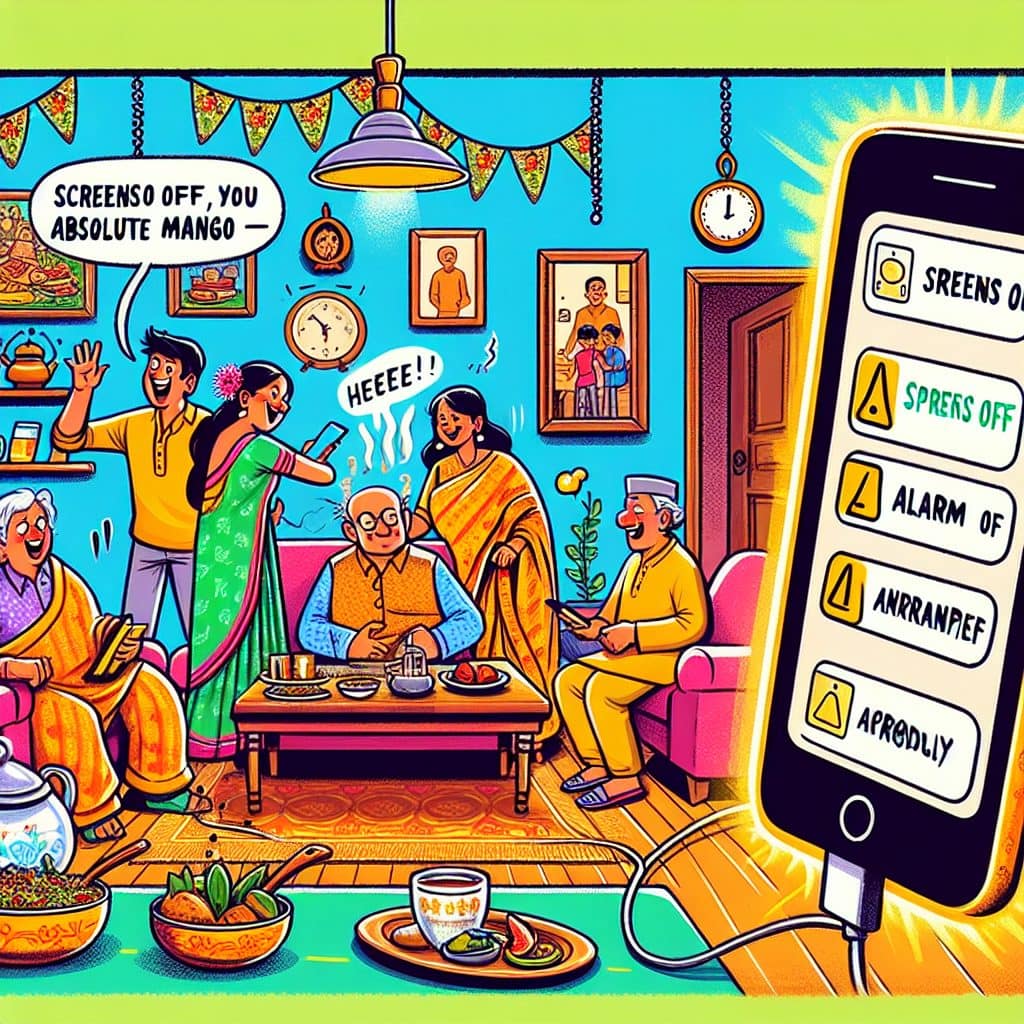
Look at your alarm time. Count backwards 8 hours. Set a SECOND alarm — on your phone, labeled “SCREENS OFF, YOU ABSOLUTE MANGO 🥭” — for that time. When it rings, put your phone on the charger outside your bedroom. Get into bed. Close your eyes.
That’s it. That’s the entire prescription. No purchase necessary. No code to enter. No “link in bio for my sleep course.” Just you, a dark room, and the radical act of doing absolutely nothing for 7-8 hours.
Your body has been waiting for this. Your railway station maintenance crew is sitting in the break room, exhausted, hoping tonight — FINALLY — you’ll let them do their job.
Let them.
Now I want to hear from you: What time did you go to bed last night — honestly? And what’s the ONE thing from this post you’re actually going to try tonight? Drop it in the comments. No judgment. Just honesty. Because the first step to fixing a sleep problem is admitting you have one — and your WhatsApp family group is definitely not going to do that for you. 😴
Why Indians Are Sleeping Like It’s a Luxury: The Health Crisis Nobody’s Talking About Read More »